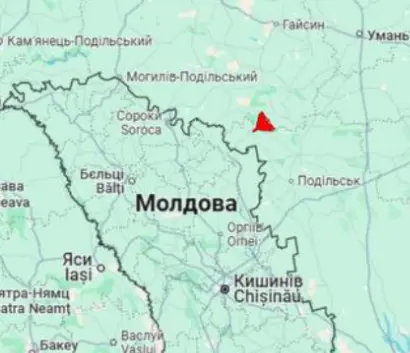
It is not the first time that unmanned aerial vehicles, likely of the Shahed type, have flown into NATO territory, causing concern but not triggering an immediate or decisive response. This situation, where Iranian drones used by Russia cross the Alliance's borders, is becoming a familiar occurrence, and it seems they are reacted to with a certain restraint, as if these incidents are endured time and again in silence.
One of the most notable incidents occurred on Romanian territory. The country, a NATO member bordering Ukraine, has repeatedly faced the issue of drone fragments falling. These incidents were recorded in counties located near the Danube, where Ukrainian ports, which are constantly attacked by the Russian army, are situated. Although Romanian authorities confirmed the discovery of drone fragments, clearly indicating that a Shahed flew into its airspace, no active measures to intercept or destroy them over its territory were demonstrated. The crash sites are usually located in sparsely populated or uninhabited areas, which might be the reason for such a restrained reaction. However, the very fact of violating sovereign airspace represents a serious challenge.
Poland, another NATO member, has also faced similar problems. There have been reports of unidentified objects flying over its skies, prompting close monitoring. Although it is not always possible to identify these objects as Shaheds or find their debris, their very presence in NATO airspace is an alarming signal. This creates tension and highlights the vulnerability of NATO territory to such uncontrolled events when a Shahed flew into the country.
These recurring incidents raise questions about NATO's strategy. On one hand, the Alliance declares an increased presence on its eastern flank and readiness to defend every inch of its territory. On the other hand, actual actions to intercept or destroy these unmanned aerial vehicles over member countries' territory remain limited. It appears that priority is given to avoiding escalation of the conflict with Russia, even at the cost of periodic airspace violations. Such an approach can be interpreted as silent endurance, causing concern among some experts and politicians who believe it sets a precedent and could encourage further violations. It is important that NATO territory is reliably protected.
The situation with falling drone fragments and violations of the Alliance's airspace is not just a technical problem, but also a political challenge. It demands a clear and decisive response from NATO that demonstrates the protection of its borders, regardless of the circumstances, so that similar incidents, where a Shahed flew into a location, do not become a constant norm. Securing NATO territory must be uncompromising.


