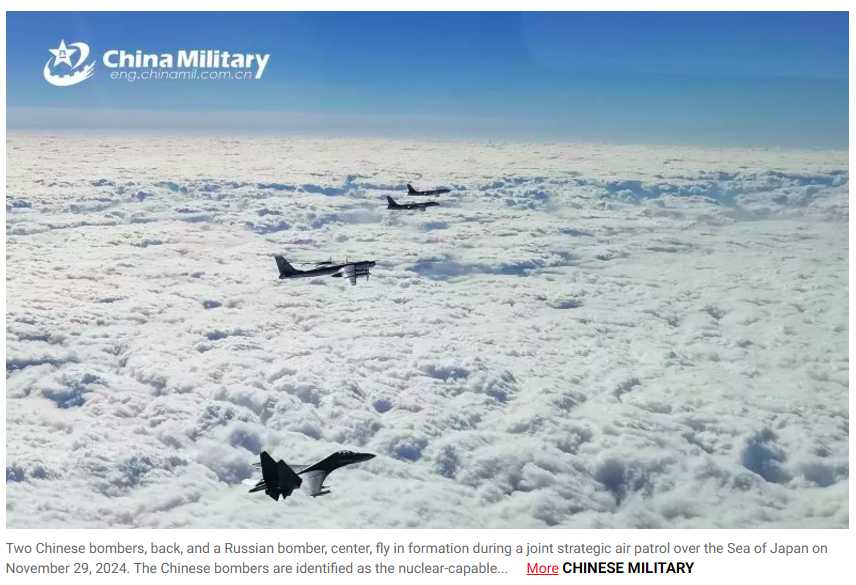
Russia and China conducted their ninth joint strategic air patrol on Friday, deploying nuclear-capable bombers over the Sea of Japan (also known as the East Sea in South Korea). This move underscores their growing military partnership and comes as a response to heightened U.S. military presence in the region. The patrol involved long-range bombers and was interpreted as a demonstration of power near Japan and South Korea, both key U.S. allies.
In contrast, U.S. forces simulated weapon deployments over Finland, a NATO member bordering Russia, emphasizing America’s extended deterrence commitments to allies, including the use of nuclear capabilities if required. This development is part of a broader trend of rising military maneuvers and strategic signaling involving the U.S., its allies, and its adversaries.
These actions reflect escalating tensions in the Indo-Pacific and Europe, with both sides demonstrating advanced military readiness and deepening alliances. While Russia and China emphasize their right to conduct such patrols under international law, they send a clear political message, especially given the Sea of Japan's proximity to contentious regions like the Korean Peninsula and Japanese waters.


