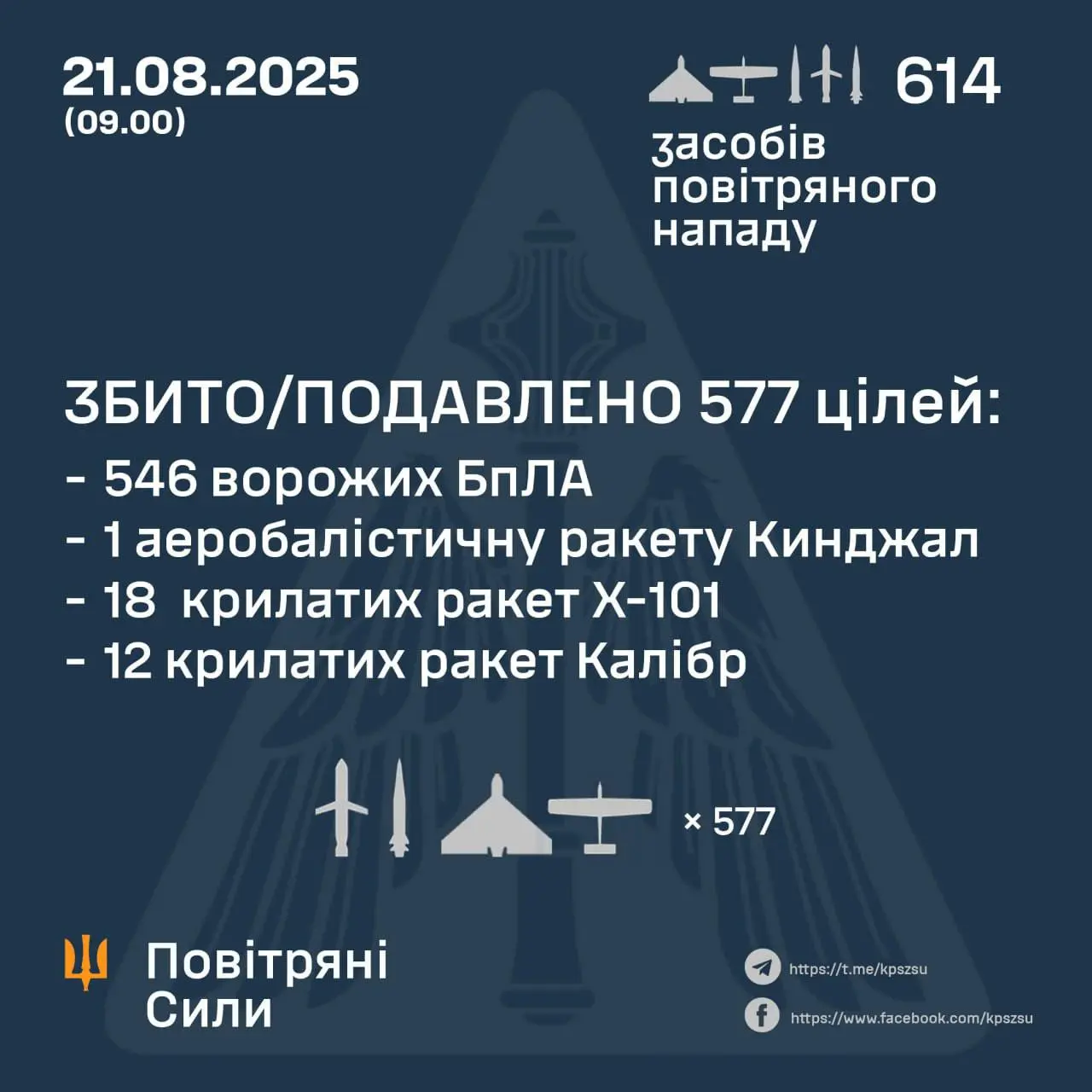
On August 21, 2025, a massive combined aerial assault was launched against Ukraine, comprising a total of 614 individual weapons. The total weight of this entire barrage is estimated to be nearly 190 metric tons of sophisticated hardware, including missiles and drones. This figure represents the full scale of the threat deployed in a single, large-scale operation. According to the Air Force, the attack was designed to be overwhelming, utilizing a diverse mix of assets to saturate and penetrate air defense systems. The sheer mass of the launched weaponry highlights the intensity of the assault and the significant destructive potential that was directed at the country.
The composition of the attack, based on the 577 threats that were successfully identified and engaged, included a wide array of weapon systems. The largest component was a swarm of 546 enemy UAVs. Alongside these drones, the assault featured highly advanced and powerful missiles. Among them was a single aeroballistic Kinzhal missile, a weapon weighing over four tons. The attack was further bolstered by a significant number of cruise missiles, including 18 air-launched Kh-101 missiles and 12 sea-launched Kalibr missiles. This combination of numerous smaller drones with heavy, high-speed missiles is a tactic intended to create complex challenges for any air defense network.
While the scale of the launch was immense, the defensive response was exceptionally effective. Air defense units successfully intercepted and destroyed 577 of the 614 incoming threats, demonstrating a neutralization rate of approximately 94%. This successful operation prevented the vast majority of the nearly 190-tonne barrage from reaching its targets. The downing of such a high percentage of threats during a complex air attack showcases a high level of readiness and operational capability. The successful interception of the difficult-to-hit Kinzhal missile and dozens of advanced cruise missiles like the Kh-101 and Kalibr are particularly notable achievements within the broader defensive success.
The events of August 21, 2025, underscore the reality of modern aerial warfare, where the volume and diversity of threats are key factors. The launch of 614 weapons with a combined weight approaching 190 tonnes represents a significant military action. The fact that the vast majority of these threats became targets shot down is a testament to the effectiveness of the defending forces. However, the primary story remains the sheer scale of the initial assault. The ability of the Air Force to counter such a massive and multifaceted threat, including a large number of enemy UAVs, is a critical element in maintaining national security against such aggressive actions.


