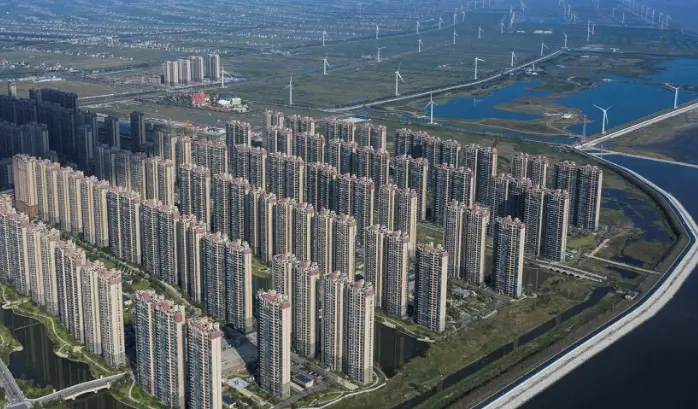
A major economic event has unfolded in China, marking the end of an era for its once-booming construction industry. The country's largest developer, Evergrande, has officially ceased to exist as a publicly traded company. The Hong Kong Stock Exchange has permanently removed the company from its listings, a move that confirms the complete collapse of the real estate giant. This event is not just about one company's failure; it is a clear sign of a deep crisis in China's economy, which was heavily reliant on its construction boom.
The downfall of Evergrande was a slow and painful process that began years ago. The company grew rapidly by taking on massive amounts of debt to fund its ambitious construction projects across the country. This strategy worked for a while, fueling incredible growth. However, in 2020, the Chinese government introduced a policy known as the "Three Red Lines" to control the high levels of debt in the property market. This policy cut off the flow of easy credit to developers, and for a company like Evergrande, which was built on borrowing, this was a fatal blow. Soon after, the company began to miss payments to its investors and suppliers, leading to a court's decision for liquidation earlier this year.
The impact of this collapse is enormous because the real estate sector is a cornerstone of the Chinese economy, contributing to nearly a quarter of its GDP. The failure of such a large player has created a massive ripple effect. Millions of Chinese families had invested their life savings into apartments that will now never be finished. It is estimated that there are around 20 million unfinished housing units across the country, a direct result of this crisis. This has shattered the trust of ordinary people in the property market, which was once seen as the safest way to store and grow wealth. The situation reveals that the rapid growth was fueled by a massive economic bubble, which has now burst.
The consequences extend far beyond individual homebuyers. Banks are now facing huge losses from bad loans issued to developers. Local governments, which relied heavily on selling land to companies like Evergrande for their revenue, are now in financial trouble. For international investors, the final delisting from the stock exchange means their investments have become worthless. The process of liquidation is unlikely to recover much for them, as onshore creditors and homebuyers in China will be given priority. This entire saga serves as a powerful warning about the dangers of debt-fueled growth and has forced a painful but necessary restructuring of the Chinese economic bubble. The final delisting of the company confirms that there will be no miraculous recovery. The future of the real estate sector in China will be smaller, more cautious, and under much stricter government control.


