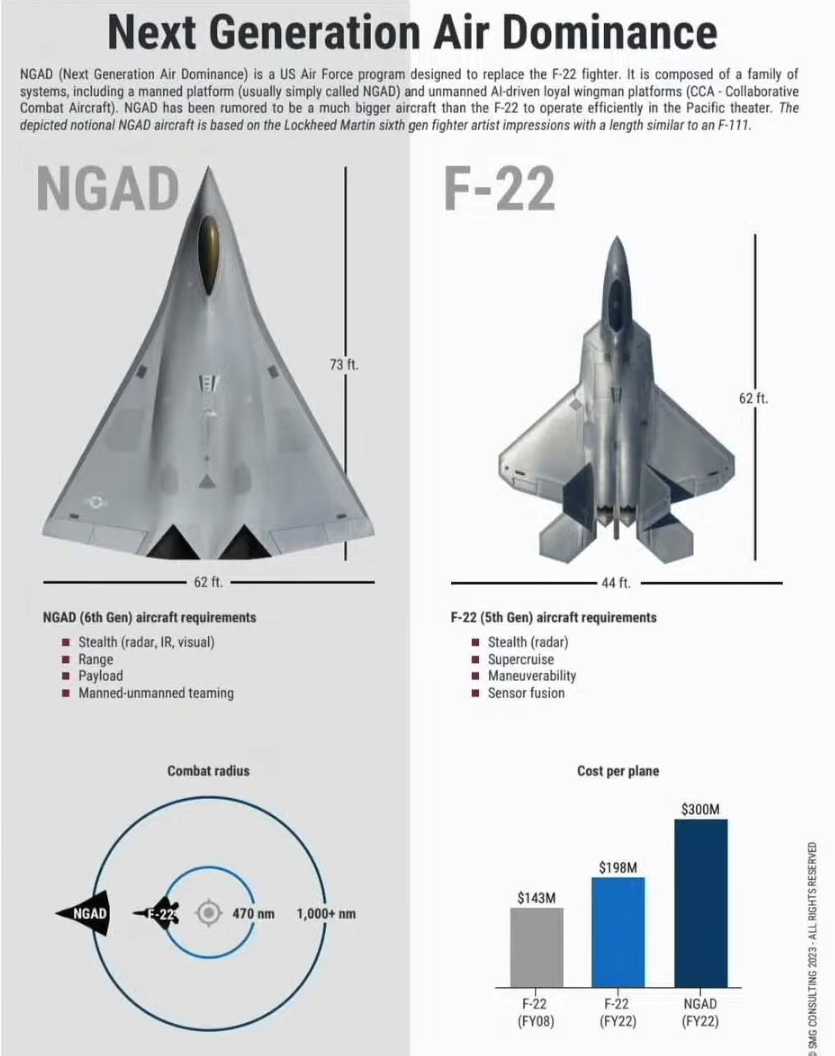
NGAD (Next Generation Air Dominance) is a U.S. Air Force program focused on developing advanced fighter aircraft and technologies to maintain air superiority. It aims to replace aging aircraft with new stealth fighters, incorporating AI, unmanned systems, advanced sensors, and possibly hypersonic weapons. The goal is to stay ahead of emerging threats like advanced air defense systems and unmanned vehicles. The program emphasizes networked warfare, with manned and unmanned aircraft working together for greater operational effectiveness.
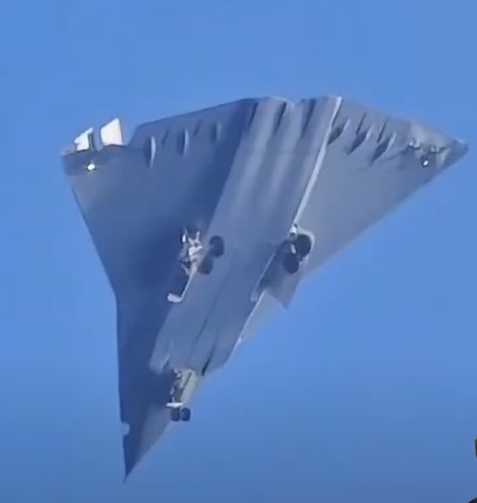
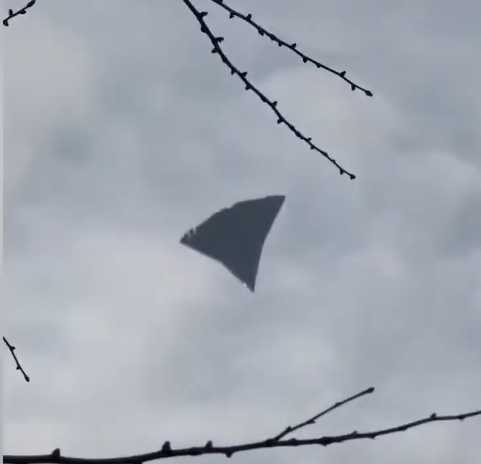
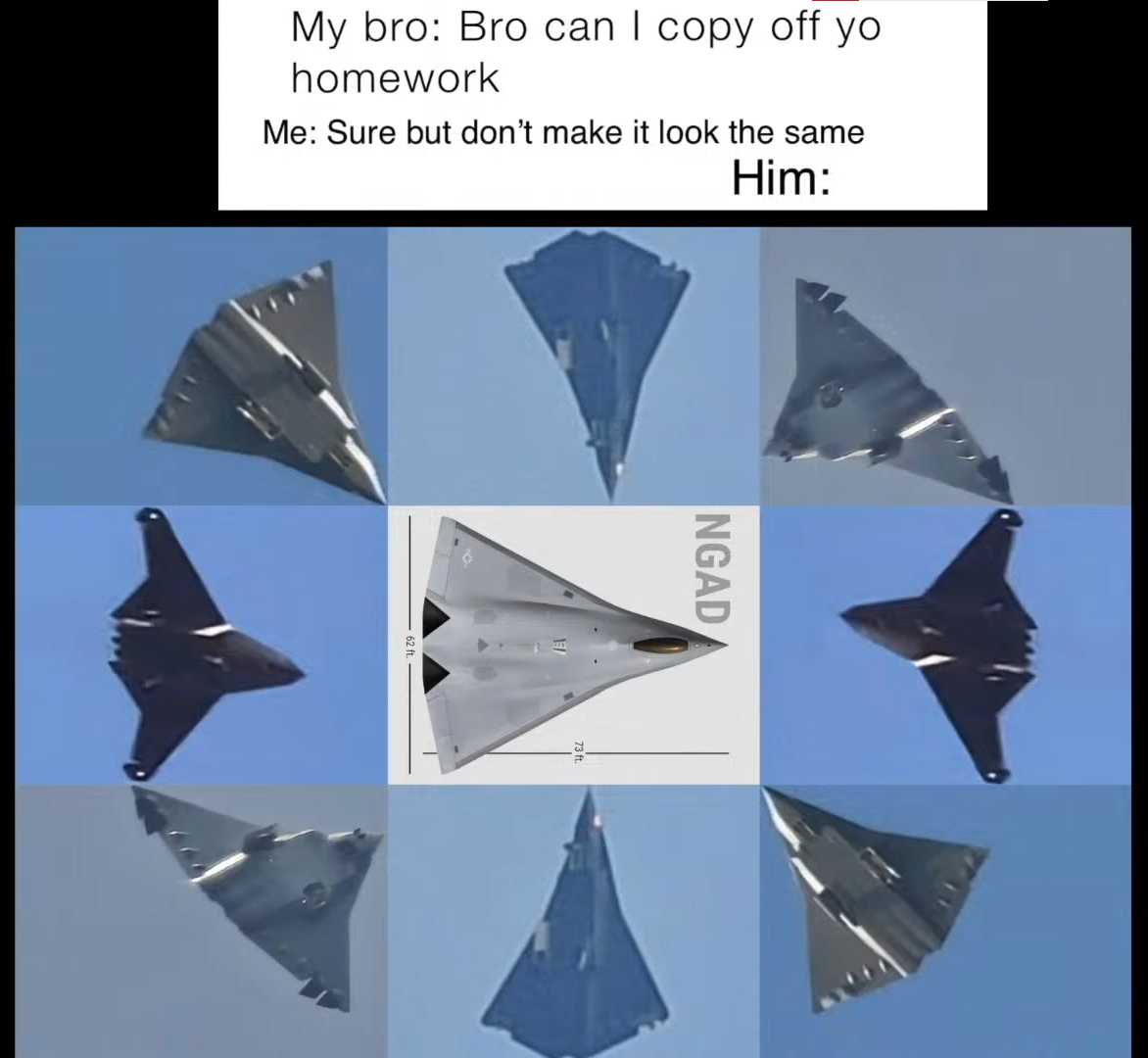
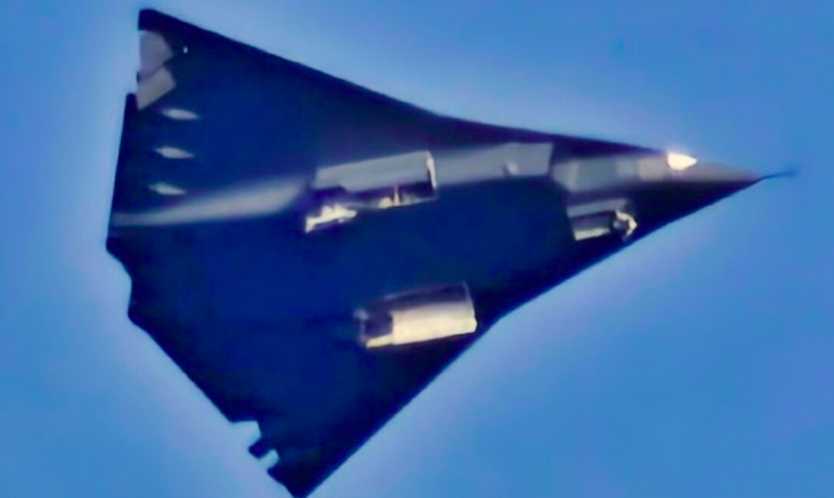
China has reportedly introduced a new sixth-generation fighter aircraft designed to compete with the U.S. Air Force's NGAD (Next Generation Air Dominance) program. While details are still emerging, the Chinese sixth-generation fighter is expected to feature advanced technologies such as improved stealth, hypersonic capabilities, enhanced sensors, and possibly AI-driven systems, similar to the goals of NGAD.
China's aim with this new fighter is to enhance its air combat capabilities and counter advanced air dominance programs like NGAD. It’s expected to play a crucial role in China’s broader strategy to modernize its military and compete with the U.S. in terms of air superiority, especially in the Asia-Pacific region. The development of these advanced aircraft is part of an ongoing arms race between the two nations as they seek technological and tactical superiority in aerial warfare.


