Concerns are growing about the increasing involvement of billionaires like Elon Musk in shaping politics and receiving favorable treatment from government authorities. Observers note a trend towards the normalization of such wealthy individuals leveraging their resources to impact the political landscape.
During the early days of a potential second Trump presidency, there was widespread astonishment at a billionaire seemingly able to influence the White House directly after significant financial contributions. Now, after a period, this concern appears to be fading from public discussion. However, this level of influence remains a critical issue.
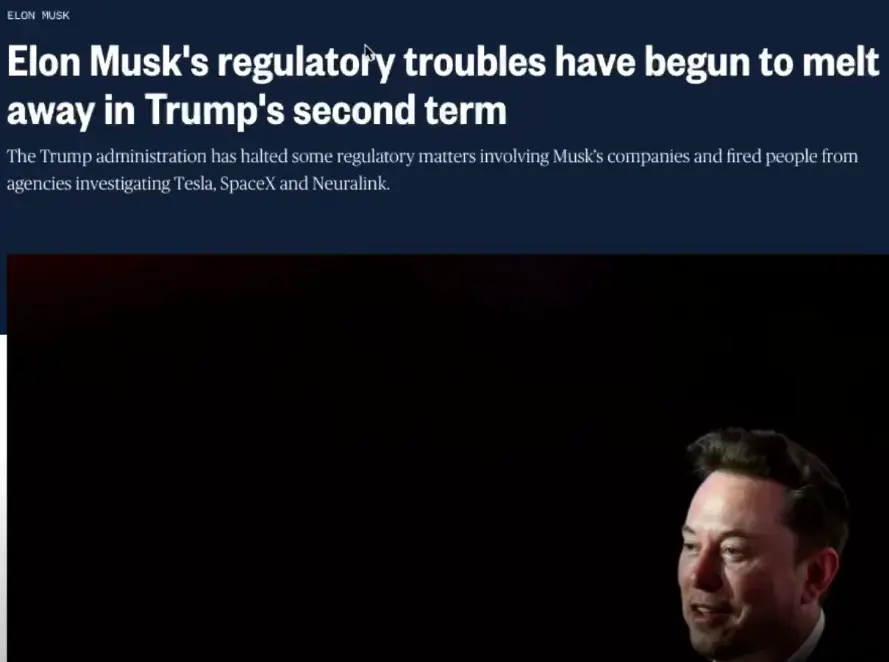
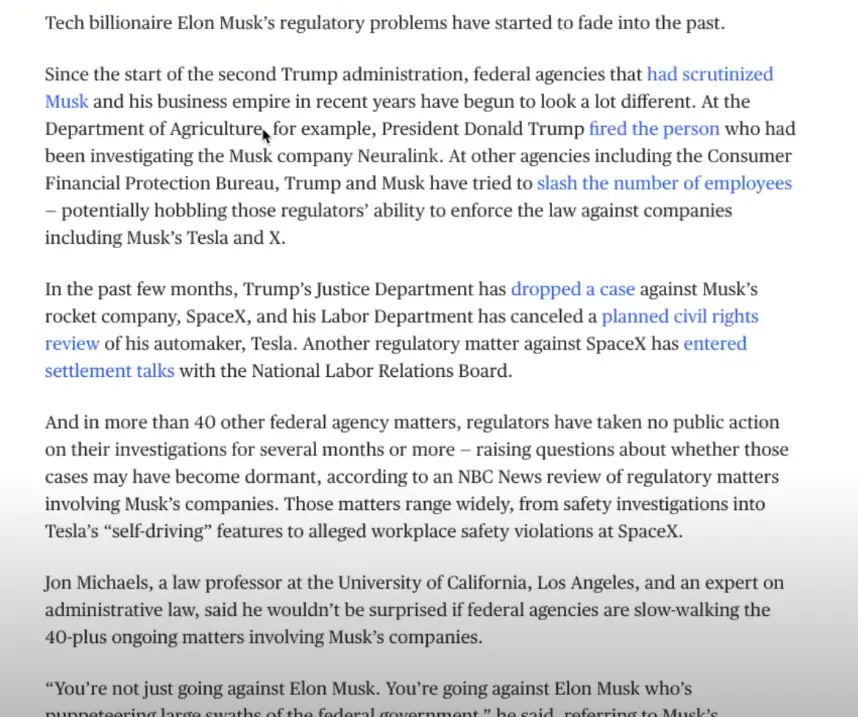
A significant development involves Elon Musk's regulatory challenges seemingly vanishing under the potential future administration. Federal bodies that previously examined Musk's companies, such as Tesla, SpaceX, and Neuralink, have changed significantly. For instance, at the Department of Agriculture, the person looking into Neuralink was removed. Other agencies like the Consumer Financial Protection Bureau have seen attempts by Trump and Musk to cut staff, potentially weakening regulators' ability to enforce rules against large businesses including Musk's.
More than 40 other federal agency matters involving Musk's enterprises have seen no progress on their investigations for several months. These cases range widely, from safety probes into Tesla's self-driving capabilities to alleged workplace safety issues at SpaceX. These matters seem to have stalled, likely due to Musk's considerable influence.
Legal experts highlight that this situation goes beyond just targeting Elon Musk; it involves him effectively controlling significant parts of the government, a role referred to as a White House advisor for government efficiency. It is also suggested that some federal employees may be worried about their careers due to Musk's documented pattern of publicly criticizing individuals who disagree with him on his social media platform.
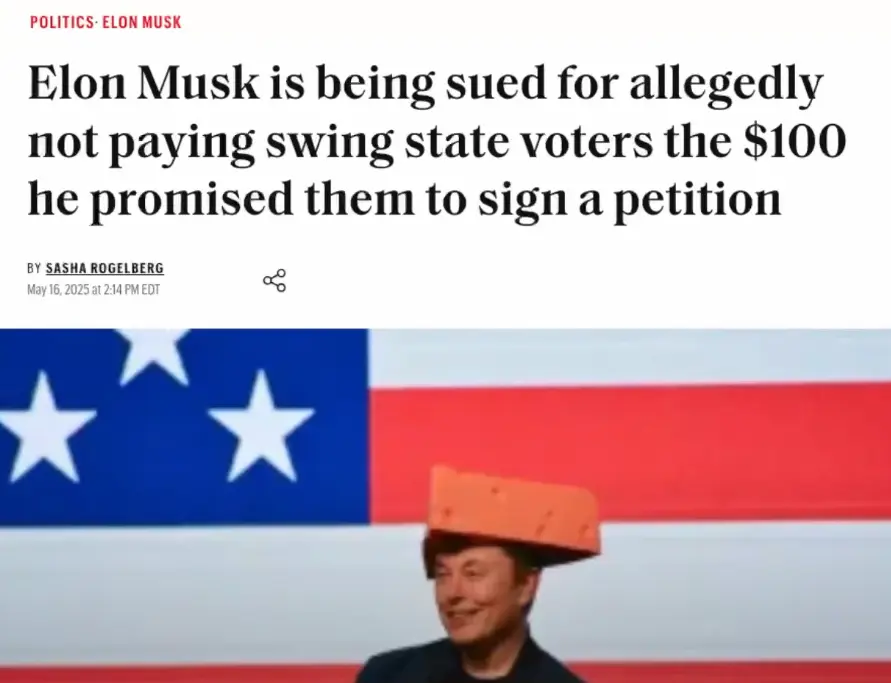
Adding to this picture, Elon Musk's America PAC is facing a lawsuit from three swing state voters who claim they were not paid the $100 promised for signing a petition and recruiting others. The petition was pitched as supporting the First and Second Amendments. America PAC offered $47, then later $100, for these actions ahead of last year's election. Those who referred others were also told they would receive payment.
The plaintiffs argue that America PAC broke its contractual promise by not paying petition signers in full. According to court documents obtained by Fortune through Court Watch, the plaintiffs anticipate over 100 individuals joining the lawsuit, with the total amount owed collectively more than $5 million. The lawsuit emphasizes that this case is fundamentally about a broken promise that was not kept for many people who believed in Elon. The lawsuit was filed last week in a Pennsylvania federal court in the eastern district of Pennsylvania, a swing state that saw $1.2 billion in campaign ads for the 2024 election. America PAC has raised more than $200 million since its May 2024 founding—much of it donated by its founder Musk—for Donald Trump's presidential campaign.
A Pennsylvania man who canvassed for the PAC filed a similar lawsuit in April, alleging he was owed $20,000 in collected signatures. The plaintiff, a John Doe, claimed America PAC failed to deliver on the payment promised by Nov 30. America PAC did not respond to Fortune's request for comment, but spokesperson Andrew Romeo denied wrongdoing in a statement to CNN regarding the April lawsuit. "America PAC is committed to paying for every legitimate petition signature, which is evidenced by the fact that we have paid tens of millions of dollars to canvassers for their hard work in support of our mission," Romeo said. Tesla didn't immediately respond to a request for comment from Musk.
America PAC's legal gray area
In addition to doling out $100 to petition signers, Musk also promised to give away $1 million a day to signees in the month leading up to the election. America PAC said in October it gave a $1 million check to Shannon Tomei from McKees Rocks, Pennsylvania, its third such check at the time.


