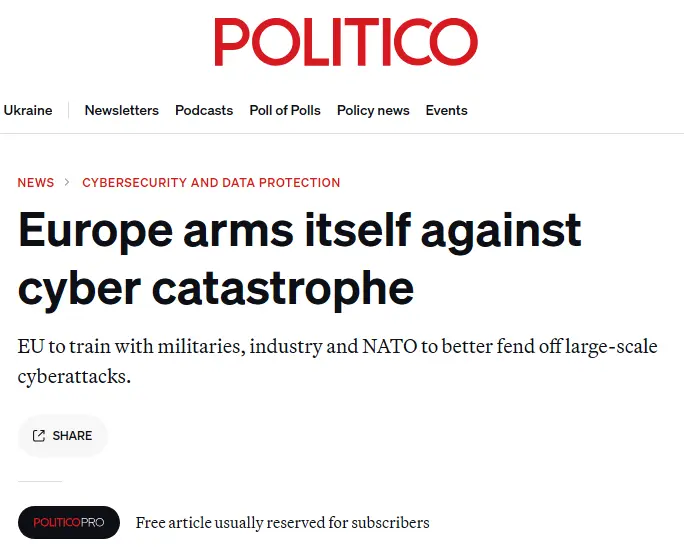
Well, Europe, it seems, has finally decided to get serious about cyber threats. Ministers from across the European Union gathered and approved an updated "cybersecurity blueprint" – a kind of digital shield designed to protect us from malicious hackers and other electronic mischief. The main idea is increased cooperation with national militaries and even NATO, so we can properly respond to large-scale cyberattacks.
The reason for this sudden epiphany is not surprising: rising geopolitical tensions, conflicts, and all sorts of digital trickery that are becoming increasingly sophisticated. It is now no secret that cyberattacks can be part of hybrid campaigns or even military operations. According to the Polish minister who chaired this meeting, Poland faces about 700 cyber incidents daily. So, as he rightly pointed out, if it's Poland today, it could be anyone else tomorrow. We need to be prepared, and preferably – together.
The new plan clearly outlines who will respond to large-scale attacks and how – at technical, operational, and political levels. It even calls for establishing "points of contact" with NATO in the event of a cyber crisis. And so we don't get too comfortable, "cyber exercises" will kick off in June 2026, training not only military and government officials but also the private sector, as well as representatives from the Balkans, Moldova, and Ukraine. Sounds ambitious, doesn't it? It just remains to be seen whether this whole machine can actually work without bureaucratic hurdles and whether the new plan won't just turn out to be another pile of papers.


