In short, two F-16s fly as a decoy, but they are ready to maneuver at any moment and are equipped with radars for targeting and reconnaissance. The moment the F-16s are attacked, something akin to counter-battery fire immediately occurs: a missile is launched in response at the Houthi launcher.
Bait and Switch- The Red Sea Response
On March 22 2025, a seemingly calm patrol took a sudden turn. A US Air Force F-16 Fighting Falcon was flying routine maneuvers over the Red Sea. Visibility was excellent. Then, radar warnings flooded the cockpit displays. A missile lock was detected, followed swiftly by another, and then a third. Instinctively, the pilot initiated evasive maneuvers- rolling hard right, deploying flares as countermeasures. A heat-seeking Sayyad missile, launched from Houthi-controlled territory in Yemen, ripped through the air, tracking the jet's engine heat. The pilot pulled a brutal nine-G turn, the aircraft groaning under the strain. Flares bloomed behind the jet, brilliant and hot, drawing the missile away. The missile detonated harmlessly. The F-16 survived.
The Game Changes
This wasn't the first time the Houthis had been aggressive. The Red Sea had become a flashpoint, disrupting commercial shipping and prompting a increased US naval presence, including repositioned destroyers. Just days earlier, a US MQ-9 Reaper drone had been shot down off the Yemeni coast, a move the Houthis quickly claimed and publicized, seemingly emboldened. They appeared to believe a fighter jet would be as easy a target as an unmanned drone. But the US had adapted its stance. The Pentagon had authorized a shift in the rules of engagement - a hostile radar lock on a US military aircraft was now considered an act of aggression, triggering an automatic response. The F-16 hadn't just been patrolling - it was part of a wide Intelligence, Surveillance, and Reconnaissance network designed to detect such activity. The pilot unknowingly served as bait in a deliberate trap.
Data Becomes Destiny
Back aboard a US aircraft carrier, potentially the USS Dwight D. Eisenhower, operators in the Combat Information Center were monitoring the situation in real time. The pilot's evasion maneuver and his call for support weren't just heard- they were instantly recorded, analyzed, and processed into precise targeting data. A live thermal feed identified the missile launch site. Trajectory calculations pinpointed the location. GPS coordinates were locked in. The retaliation sequence was initiated. Meanwhile, high above, at nearly 60000 feet, a Navy MQ-4C Triton drone continued its silent watch, its sophisticated sensors capturing every thermal spike and electronic pulse along the coast, streaming crucial data back to command. It saw everything the Houthis were doing.
The Hammer Falls
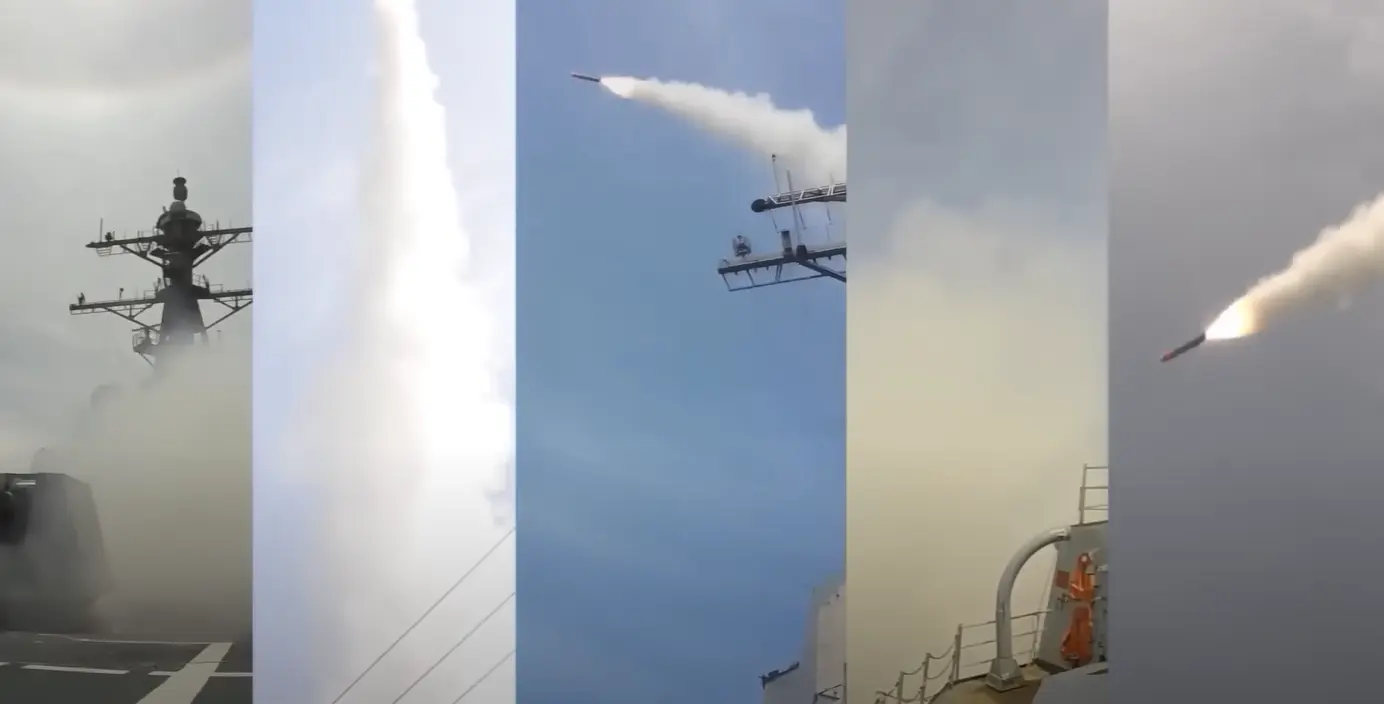
With confirmed targets and the clock ticking, the US Navy's multi-layered response plan went into effect. Deep within the vertical launch systems of a nearby Arleigh Burke-class destroyer, Tomahawk cruise missiles were prepared. The launch order came quickly- less than five minutes after the initial missile threat ended. Tomahawks launched in a coordinated salvo, striking their pre-programmed targets low over the waves. Simultaneously, from the deck of another carrier, possibly the USS Harry S. Truman, strike aircraft were readied. E-2D Hawkeyes launched for electronic surveillance. EA-18G Growlers took off, armed with jamming pods designed to blind Houthi radar and scramble communications. Following them, fully loaded F/A-18 Super Hornets armed with GPS-guided JDAMs and radar-seeking HARM missiles, ready to obliterate any remaining active sites.
The Lesson Learned
The combined strike package hit its targets with brutal efficiency. The missile launch site was destroyed. The mobile radar vehicle that had locked onto the F-16 was vaporized. A suspected command post and an ammunition depot were obliterated. The Growlers ensured that any attempts by the Houthis to communicate or assess the damage were met with electronic chaos. No US aircraft or personnel were lost. The Houthis, and their foreign backers, showed their hand and learned a harsh truth. Attacking a slow, unarmed drone might yield propaganda, but attacking a US fighter triggers an immediate, overwhelming, and highly coordinated multi-domain counter-strike. The US didn't need a press release to send a message. The destruction on the ground, seen by intelligence assets and likely whispered about in hushed tones, spoke volumes.
The Red Sea is calm now, but the silence is a warning. Every Houthi radar operator knows they are watched, and the consequence for firing on a US jet is not a simple dogfight, but a swift, lethal, and precisely targeted retaliation. They might think twice before they dare to lock on again.
Would you have stopped after neutralizing the launcher, or gone further and wiped every radar site along the coast? Be honest, be strategic. Drop your thoughts in the comments. We will read every single one.


