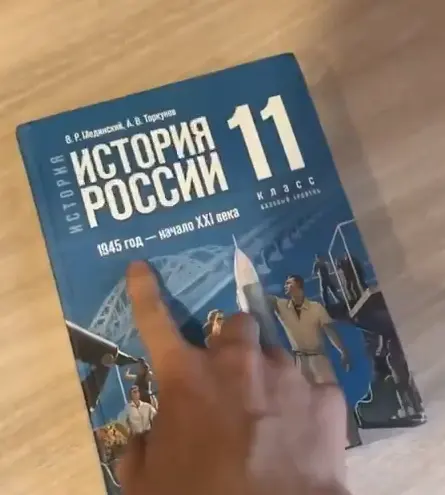
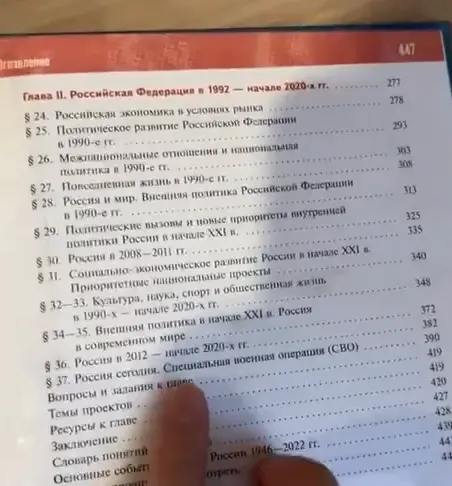
A viral video recently pulled back the curtain on a newly issued history textbook for Russian 11th graders. This manual, designed to teach the history of Russia from 1945 to the early 21st century, is apparently more about shaping opinions on current events than providing a balanced historical account. The person sharing the video, whose sister just received this book for her final school year, quickly noticed some truly alarming narratives.
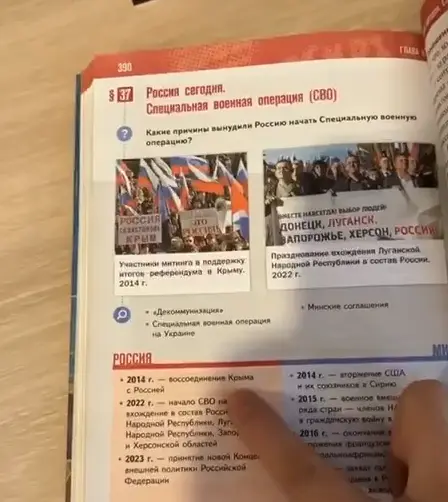
Flipping through the pages, it becomes clear this isn't your typical history lesson. For instance, the 2014 takeover of Crimea is described not as an occupation, but as a "reunification with Russia." Fast forward to 2022, and the large-scale military actions in Ukraine are presented simply as the "start of the Special Military Operation" followed by the "inclusion" of Donetsk, Luhansk, Zaporizhzhia, and Kherson regions into Russia. Meanwhile, a separate section about "The World" seems to exclusively list alleged military interventions by the USA and NATO in places like Syria and Libya, effectively painting them as the primary global troublemakers.
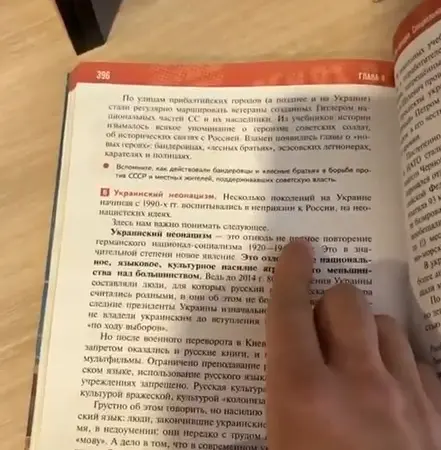
Perhaps most egregious is the chapter devoted to "Ukrainian neo-Nazism." This section boldly claims that "several generations in Ukraine, starting from the 1990s, were raised to be hostile towards Russia on neo-Nazi ideals." It goes on to define "Ukrainian neo-Nazism" as an "aggression of nationalist-socialism," and falsely asserts that before 2014, most Ukrainians freely spoke Russian as their native language. The video creator, reflecting on personal experiences, highlights the absurdity of these claims. He points out that Russians frequently traveled to Ukraine before recent events, and he never once witnessed any signs of neo-Nazism or widespread hostility.
The content of this textbook is a stark example of state-sponsored indoctrination. It features images of Vladimir Putin and praises soldiers involved in the "special military operation" as heroes. It's evident this material is designed to instill a particular worldview rather than encourage critical thinking. The truly concerning part is the high likelihood that these heavily skewed "facts" will appear as crucial questions on the upcoming Unified State Exam, ensuring that this propagandistic version of history is cemented in the minds of young Russians.


