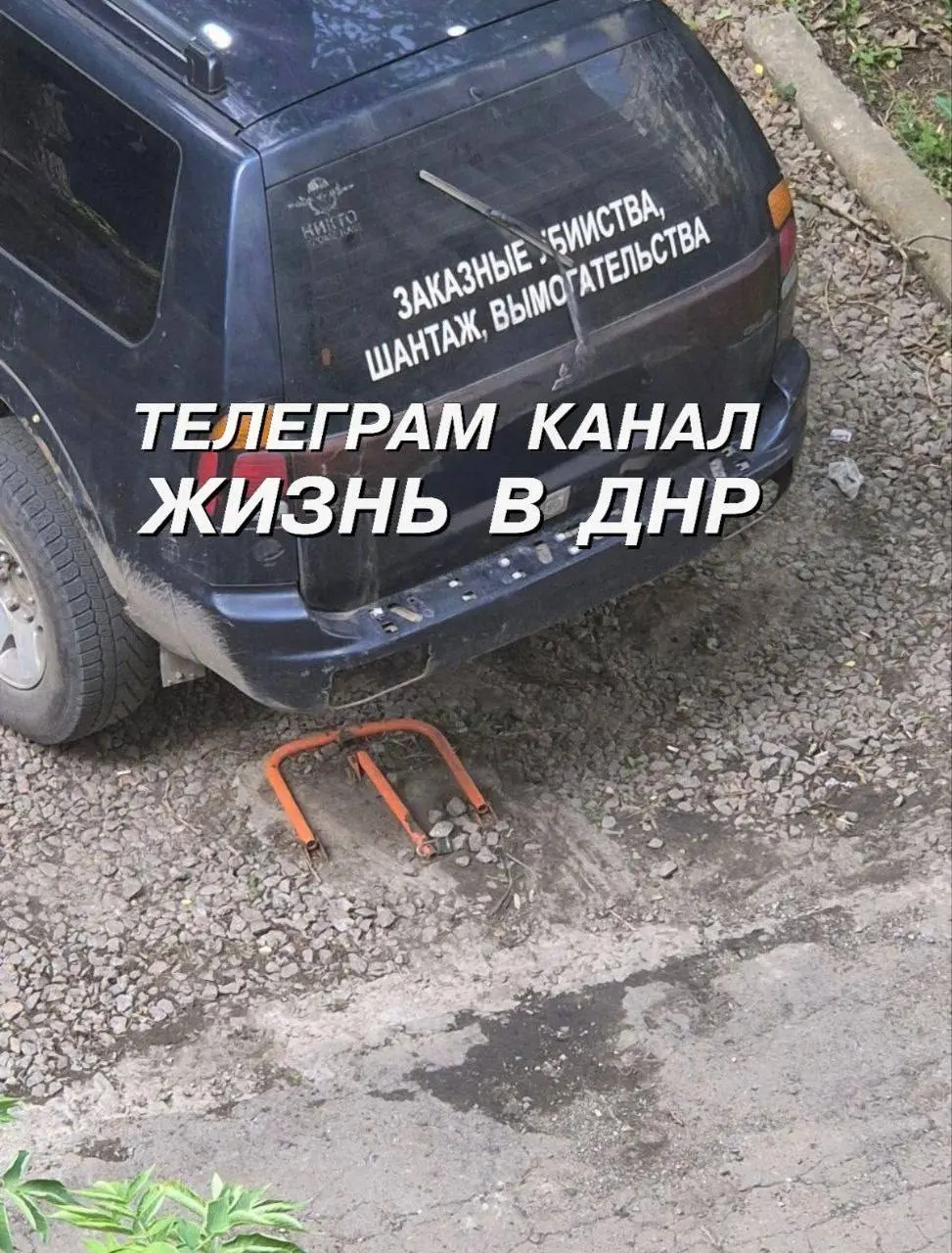
This photograph, taken on a street in the temporarily occupied Donbas, is a vivid testament to what life in the region has become after 2014. On the rear window of a black SUV, there is a sticker with a blatant offer of criminal services. In large white letters, it reads "CONTRACT KILLINGS, BLACKMAIL, EXTORTION." This is not a scene from a movie about gangsters from the 90s, but the everyday reality of the so-called "Russian world."
The appearance of such an advertisement in plain sight demonstrates the complete collapse of the law enforcement system and the rule of law in the occupied territories. In an environment where the law is defunct and power is held by armed groups, crime feels absolutely impunity. What was previously unthinkable and could only exist in the shadows is now publicly displayed as a standard business proposal. This indicates that the criminal situation in the DNR has reached a critical level, where criminal elements not only exist but openly compete for clients without fear of any consequences. Local residents are deprived of any protection, as those who are supposed to maintain order are often part of this criminal ecosystem themselves.
For years, Russian propaganda has spoken of "protecting the people of Donbas" from mythical threats. However, the reality turned out to be completely different. Instead of the promised stability and prosperity, the occupation brought lawlessness, fear, and the rule of the strong. The photograph of the car advertising murder is a direct illustration of the consequences of this "liberation." Instead of protection, people received an environment where their lives and property are worthless, and any conflict can be resolved with the help of mercenaries. The appalling criminal situation in the DNR is a direct result of the actions of the occupying authorities and local collaborators who destroyed state institutions and replaced them with gangster-like codes of conduct.
Thus, this vehicle is not just a means of transport but a symbol of deep social and legal degradation. It shows that for many in the occupied territories, violence has become the norm and a way to earn a living. While propagandists continue to talk about a "great mission," ordinary people are forced to live in an atmosphere of constant danger, where advertisements for the most heinous crimes are part of the urban landscape. The dreadful criminal situation in the DNR is the price the region is paying for the Russian occupation.


