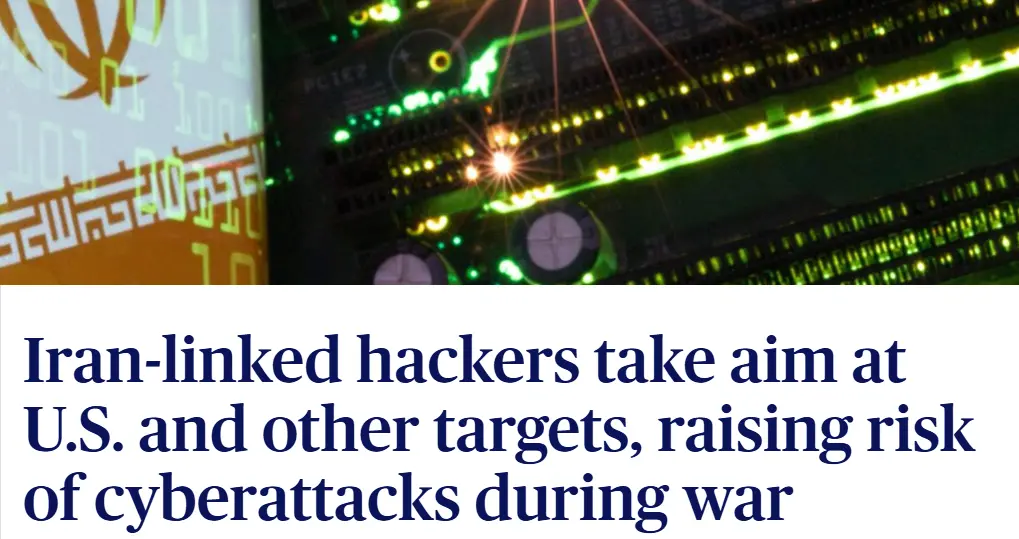
Hackers linked to Iran want you to believe they have taken the gloves off and are an unstoppable force. Right now, they are targeting the United States and the Middle East with a wave of digital chaos. They are not sitting in basements trying to steal credit card numbers anymore. They want to break physical things. They recently hit Stryker, a major American medical device company, and they are openly hunting for weak spots in local water plants, rural hospitals, and regional power stations. Their stated goal is painfully simple. They want to wear down the American war effort, drive up energy costs, and cause as much pain as possible for everyday people. They even hack into local security cameras just to help Iran aim its missiles better. It is a terrifying strategy of pure sabotage, but it is built on a massive lie.
Let us be brutally honest about what is really happening behind the screen. These pro-Iranian hacker groups are actually incredibly weak right now. Their skills are lacking, and their internal structures are a mess. They are simply putting on a massive theatrical show to look tough. Behind the scenes, it is the Russian hackers who are stepping in and doing the real heavy lifting. The Russians do all the dirty work. They write the complex code, they breach the firewalls, they plant the destructive malware, and then they quietly step back. They let Tehran take all the credit and announce the hack to the world. Why? Because the Russians do not want to expose themselves too much to the global public. They are already radioactive, and they want to avoid triggering a massive, direct retaliation from the West. Meanwhile, Iran desperately needs to look like a mighty digital empire to its own citizens. It is a pathetic, cowardly arrangement where one terrorist state hides behind another.
When you look at this miserable alliance, you cannot help but think about the IT Army of Ukraine. Both sides represent massive shifts in how modern wars are fought online, but they are fundamentally complete opposites in morality, bravery, and execution. The Ukrainian cyber force emerged out of pure desperation and self-defense when Russian tanks rolled across their border. It is a massive, decentralized network of volunteers from all over the world who use their skills to protect a nation. They do not hide behind fake names or partner states. They proudly own their actions. They target Russian banks, tax systems, and military supply chains. They use coordinated attacks to paralyze the aggressor's ability to wage physical war. They punch up at a massive military machine, dragging the Russian economy to a halt.
In contrast, the fake Iranian proxy groups punch down. Guided by their Russian handlers, they look for the easiest, most vulnerable targets they can find. Local water plants and rural health care facilities often lack the huge budgets needed for top-tier cybersecurity. These hackers exploit these exact underfunded systems just to create panic among ordinary families. They are not trying to stop an invading army; they are trying to hurt civilians to score cheap political points on social media. Experts are calling them chaos agents because they focus entirely on data destruction rather than any actual strategic military victory. They just want the world to burn a little brighter while they hide in the shadows.
We are watching a massive cyber warfare escalation unfold right in front of our eyes, and the old rules no longer apply. The days of hackers just being annoying thieves are dead and gone. Today, a few lines of malicious code can shut down a hospital or blind a defense system. While the Ukrainian digital resistance has shown us how a brave, crowd-sourced defense can cripple a tyrannical empire, the Iranian-Russian alliance shows us the pathetic, dark side of state-sponsored hacking. They remind us that our digital infrastructure is terrifyingly fragile and that our enemies will cheat, lie, and hide to hurt us. Everyone needs to wake up, update their systems, and prepare for a very bumpy ride.


