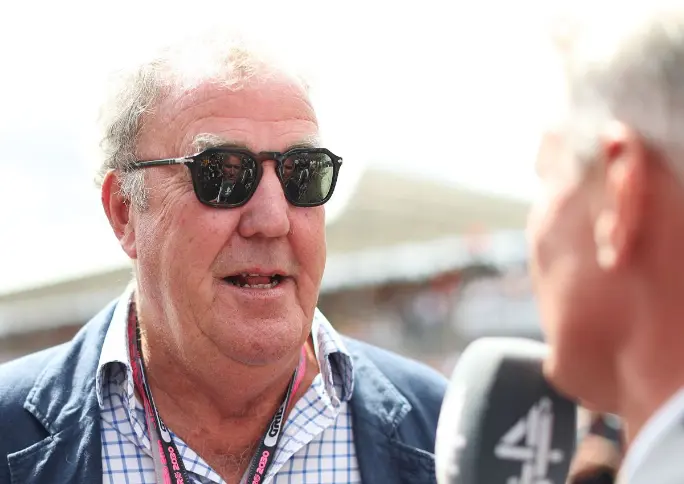
The world is used to seeing Jeremy Clarkson as a car guru, a man who humorously and sarcastically discusses engine power and design flaws. However, recently he has been increasingly vocal on topics far from the automotive world. His columns for The Sunday Times have become a platform for sharp, uncompromising thoughts on the modern world. And in one of his landmark articles, he took on the analysis of figures who are shaping the global agenda today, particularly Donald Trump, his associate JD Vance, and their attitude toward the war in Ukraine. This column is not just another review but a true manifesto of frustration and concern for the future of Western civilization.
The Turning Point
Clarkson admits that in the early days of Trump's presidency, he found a certain charm in his antics. Banning heavyweight boxers from competing against schoolgirls or stating that oil and gas are better than wind for generating electricity seemed to him like manifestations of common sense wrapped in an eccentric package. But everything changed after one meeting at the White House. When Clarkson saw Ukrainian President Volodymyr Zelenskyy, a war-weary leader, being humiliated before the world press, demanding explanations for why he wasn't wearing a suit, something inside him broke. It wasn't just tactless—it was vile. This was the moment when Trump's strange politics transformed into blatant bullying in Clarkson's eyes.
Disdain for Allies
Clarkson's anger only intensified when JD Vance, the vice president and a loyal ally of Trump, took the stage. Vance, mocking European allies, called Great Britain and France "random countries" that hadn't fought a war in 30 or 40 years. This statement struck Jeremy to his core. He reminds Vance that just recently, British soldiers were dying in deserts supporting crazy American schemes, and that Britain only paid off its final installment of WWII debt to the US in 2006. Clarkson draws a devastating historical parallel: Trump's attitude toward Ukraine is similar to Franklin Roosevelt telling Churchill, "Look, Hitler has taken Poland, so just let him have it." Such contempt for history and allies, in Clarkson's view, is a sign not of strength, but of dangerous shortsightedness displayed by some world leaders.
The Problem with Billionaires in Power
Clarkson goes further, analyzing the broader problem of billionaires coming to power. He believes that people like Trump, Elon Musk, or Vladimir Putin live in a distorted reality. Their success in business convinces them of their own exceptionalism. They begin to believe that because they are lucky workaholics (which, according to Jeremy, is all it takes to get rich), they are better than others. All of this politics boils down to simple logic: they see everyone with less money as mere clerks, and other countries as office boys to be ignored. Who cares what Greece or Latvia thinks? They are just minor players on the world stage. By this logic, Trump can easily tell Putin, "OK, Vlad, you can have Ukraine," and tell Xi Jinping, "you can have Taiwan." And if anyone objects, they can just be crushed with tariffs and have their gas cut off.
The Lack of True Leaders
What scares Clarkson the most is the leadership vacuum in the West. He sees no one who can stand up to this new world order. "Where are the modern Churchills?" he asks. He looks at current politicians and sees only weakness: Keir Starmer fawning over Trump, Nigel Farage parroting the White House line, and Kemi Badenoch denying Vance's obvious statements. Jeremy Clarkson recalls writing many years ago about the need for a "United States of Europe"—with a single currency and army, as a counterbalance to the madness in Russia, China, and America. It seemed like a dream then, but now he sees it as the only salvation. It seems the world leaders of the old mold have disappeared.
Conclusion
Clarkson's article is a heartfelt cry from a man who sees the foundations of the world crumbling. He describes the global status quo as shocking: a maniacal school bully in the White House, a killer in the Kremlin, and NATO on the brink of collapse. And no one dares to say anything, because Donald Trump is that same bully who will flush your head down the toilet if you dare to disagree. It will take time to process this horror, but Jeremy is certain: soon the world will need someone to raise a voice of righteous rage. His thoughts on JD Vance and his contempt for allies are just one part of a larger picture. A picture of a world where force has replaced diplomacy, and cynicism has replaced respect. And for now, against this grim reality, he makes the only choice possible for himself: to stay in his home in Chipping Norton and continue to speak the truth about Ukraine and the world, no matter how bitter it sounds.


