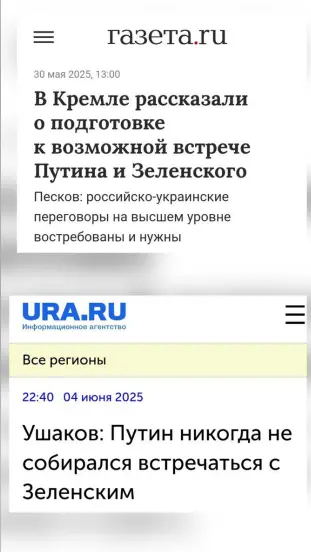
Russian officials are presenting a dizzying array of statements concerning a potential high-level meeting between the leaders of Russia and Ukraine, creating widespread confusion. Not long ago, on May 30th, news outlet Gazeta.ru, referencing Kremlin figures like Peskov, indicated that active preparations were in motion for such a summit. These reports went further, stressing that top-tier discussions were not only desired but considered essential, hinting at a potential breakthrough in diplomatic channels.
This hopeful narrative, however, was abruptly contradicted just a few days later. By June 4th, URA.RU carried a statement from another official, Ushakov, who categorically dismissed any such plans. This later account asserted that the Russian president had never entertained the idea of meeting his Ukrainian counterpart.
This whiplash of contradictory information is far from an isolated incident; it strongly resembles a deliberate and frequently used tactic. By disseminating one version of events and then swiftly countering it with an opposite claim, those in power can effectively test the waters. They observe the reactions from both domestic audiences and the international community, assessing which narrative resonates most strongly or best aligns with their shifting objectives at any given moment. This approach keeps all possibilities on the table, deliberately obscures true intentions, and perhaps serves to distract from other ongoing matters. It is a classic maneuver of saying one thing to gauge reactions, then possibly saying something completely different the next day, all as part of a broader information strategy designed to maintain flexibility and control the narrative.


