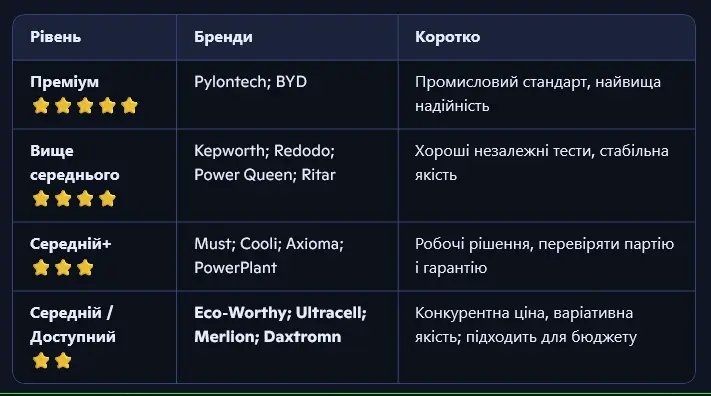
Let’s be honest for a second. Most people treat batteries like AA cells for a TV remote. They look at the price tag, grab the cheapest black box they can find, and hope for the best. With solar energy storage, that is a recipe for disaster. You aren’t just buying a battery; you are buying the heart of your home’s energy system. If it fails, you are sitting in the dark, and your wallet is empty.
When we talk about the absolute top tier, we are talking about the "smart" guys. Brands like Pylontech and BYD are the industry standard for a reason. They aren't just batteries; they are computers that store energy. They communicate directly with your inverter. If something goes wrong, the battery screams for help and shuts down safely. I would also add Victron and Dyness to this list. If you want to sleep at night and not worry about balancing cells, this is where you put your money. Yes, they cost more, but reliability is priceless.
Stepping down a notch, we have the "Above Average" crew. These are mostly stand-alone batteries. They don't talk to your inverter, but the build quality is solid. Brands like Kepworth, Redodo, Power Queen, and the very popular LiTime fit here. Ritar is also hanging around in this group. These are great for DIY enthusiasts who know what they are doing. You get good cells, usually automotive grade, but you lack that premium communication integration. It is the best lithium battery for solar if you are on a budget but still respect yourself.
Then we get to the messy middle. This is where things get tricky. Brands like Must, Cooli, Axioma, and PowerPlant often rebrand cells from various sources. One batch might be amazing, and the next one might be mediocre. They work, and they are better than lead-acid trash, but you need to check the warranty and the seller's reputation. I’d also throw Deye low-voltage batteries into this mix—solid, but often finicky if not paired with their own inverters.
Finally, we have the "Budget" or "Lottery" tier. Eco-Worthy, Ultracell, Merlion, Daxtromn, and LogicPower. Look, I’m not saying they won't work. They will turn your lights on. But these lifepo4 battery manufacturers cut corners to get that price down. The casing might be plastic instead of metal, the BMS (Battery Management System) is basic, and the cells might be "Grade B" leftovers. If you are building a small system for a shed, go for it. But for a main house system? You are playing with fire, sometimes literally. Don't be cheap. Buy quality.


