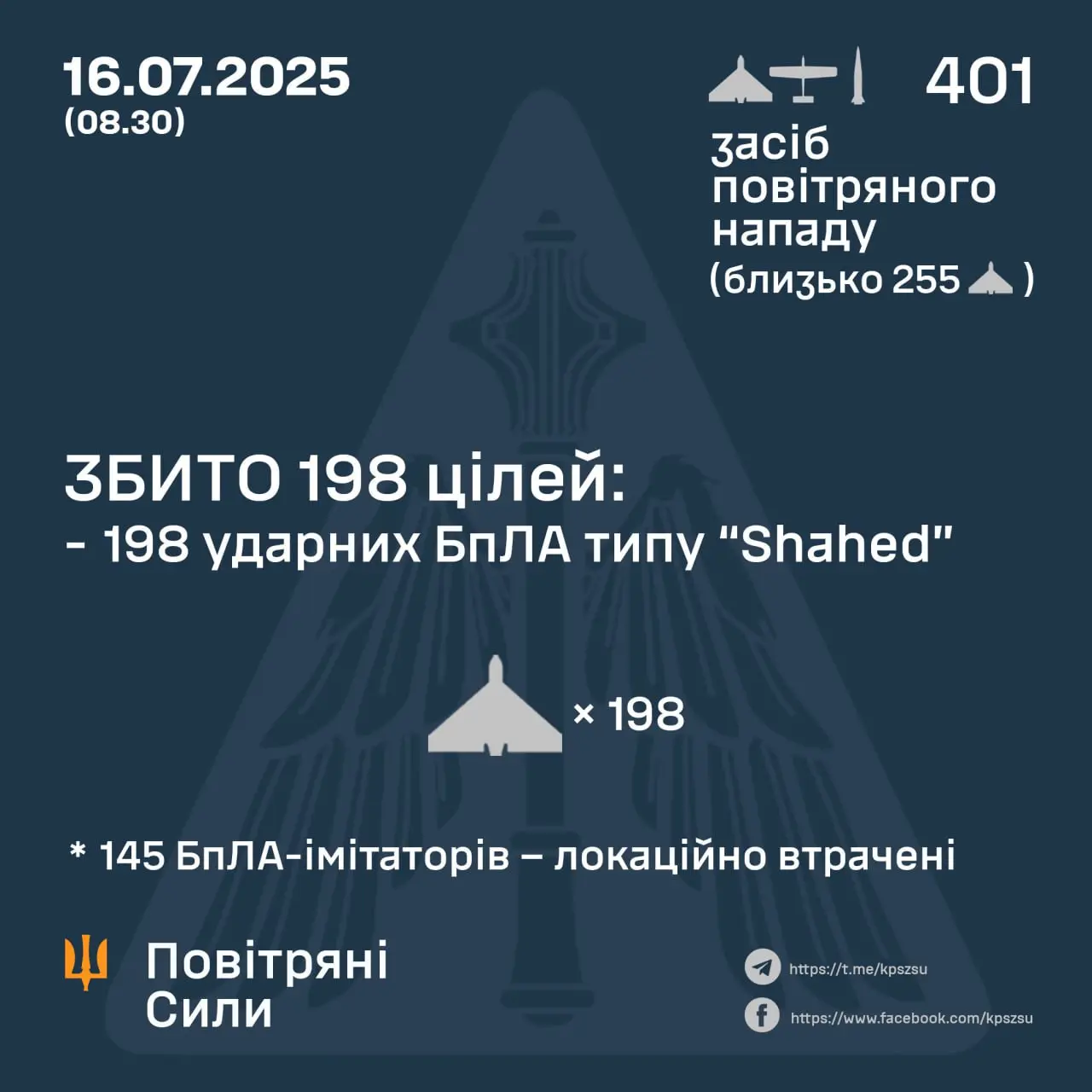
The night of July 16 marked one of the most intense aerial assaults against Ukraine, a coordinated and massive drone attack designed to overwhelm the nation's defenders. The aggressor unleashed a barrage equivalent to over 12 tons of high explosives, a clear attempt to cause maximum destruction. The attack involved a complex mix of weaponry, launched from multiple directions including Russian territory and occupied Crimea. The primary targets were strategic cities such as Kryvyi Rih, Kharkiv, and Vinnytsia, placing civilian populations and critical infrastructure in grave danger.
The assault was multifaceted, featuring 400 unmanned aerial vehicles of various types. Among these were 255 Shahed drones, notorious for their destructive power. In addition to the drone swarm, the attack included a ballistic missile. The launch of the Iskander-M from Crimea added a significant and fast-moving threat to the already saturated airspace. This combined arms approach, using both slow-moving drones and a high-speed missile, was a calculated tactic to pierce through defensive layers. The use of imitator drones was another key part of this strategy, intended to distract and deplete defensive resources.
Despite the unprecedented scale of the assault, Ukraine's air defense mounted a formidable response. The effort was a testament to the coordination between various branches of the Armed Forces. Aviation, anti-aircraft missile units, and mobile fire groups worked in concert to counter the incoming threats. A crucial role was played by electronic warfare units, which successfully suppressed or jammed 145 imitator drones, preventing them from serving their purpose as decoys. The sky became a battleground where advanced technology and the determination of defenders met a wave of enemy hardware.
The results of this engagement highlight the effectiveness of the defensive network. Air defense forces successfully intercepted and destroyed 198 enemy UAVs, a significant portion of the attacking Shahed fleet. This remarkable success saved countless lives and prevented widespread damage. However, the ferocity of the drone attack meant that some munitions reached their targets. A total of one missile and 57 UAVs caused impacts across 12 different locations, and debris from downed drones fell in two other areas. The battle for the skies over Ukraine continues, with its air defense systems being constantly tested and proving their resilience against even the most severe attacks, including the threat from weapons like the Iskander-M. This night demonstrated both the enemy's destructive intent and the unwavering strength of the nation's protectors.


