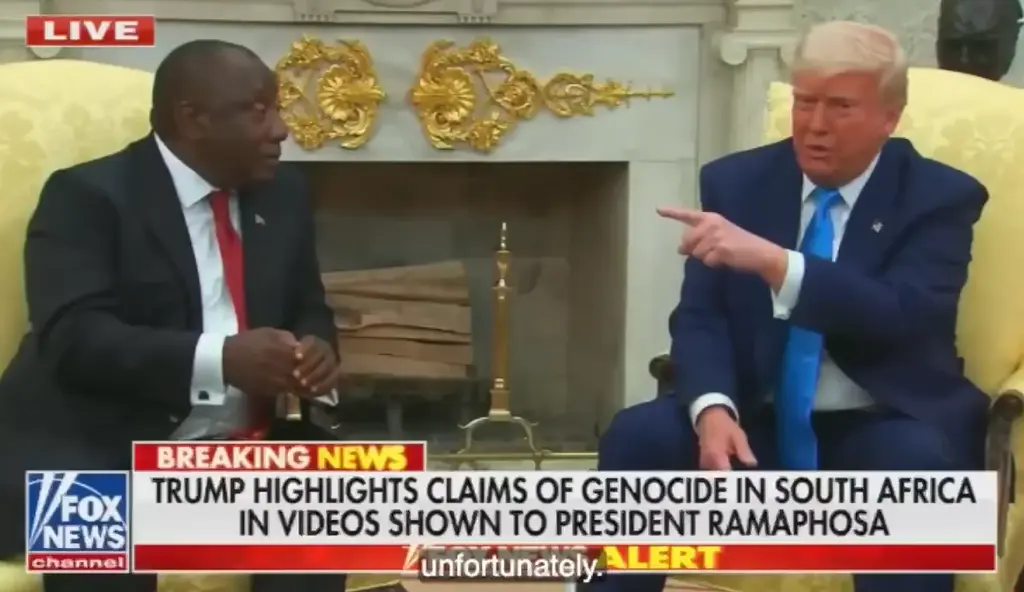
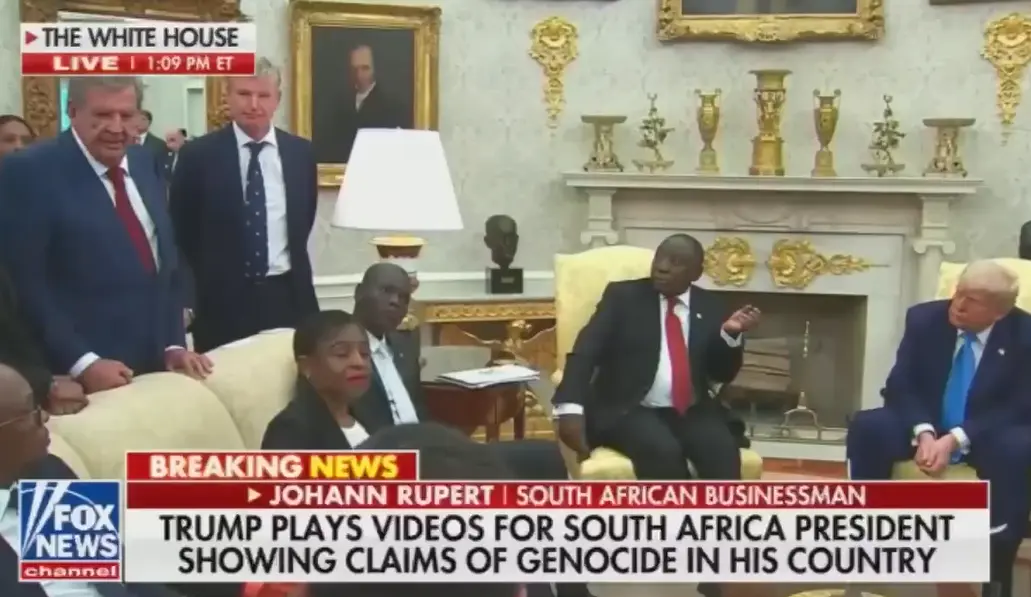
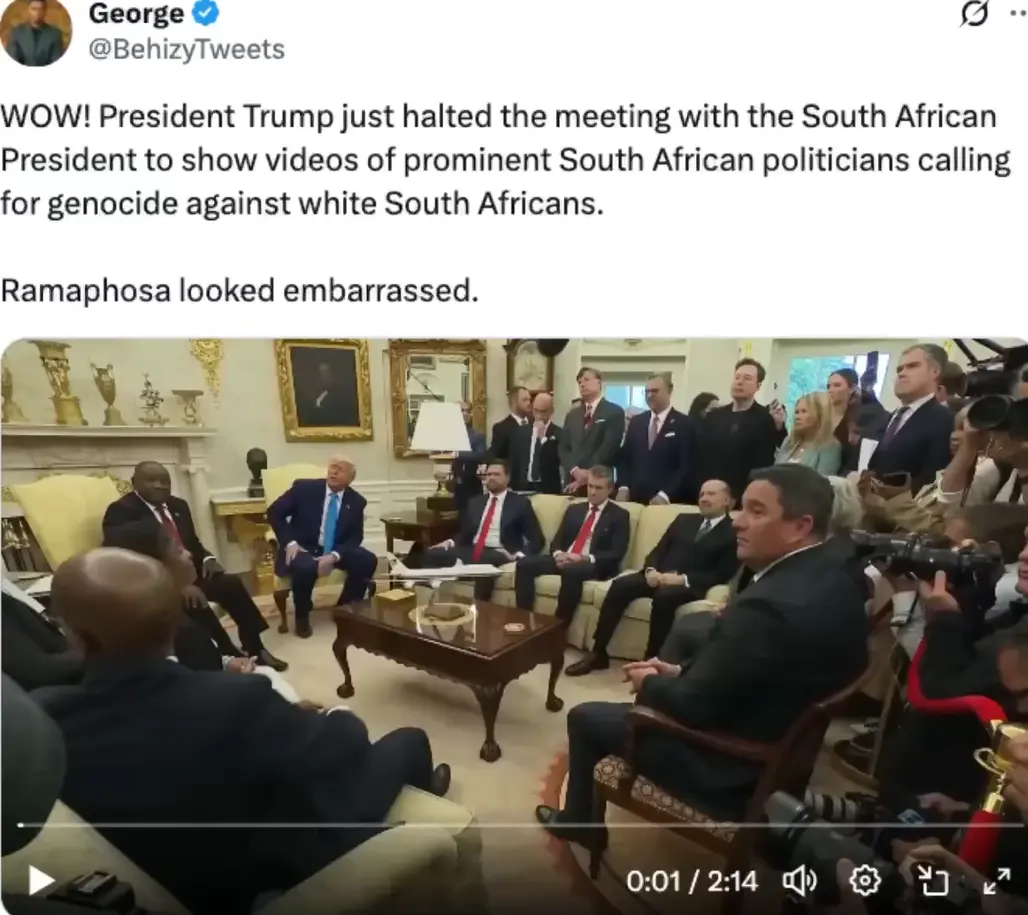
In a highly unconventional diplomatic encounter, President Trump paused a meeting with South African President Ramaphosa to display videos. These videos depicted South African political figures purportedly calling for acts of genocide against the white population of South Africa. President Ramaphosa appeared visibly uncomfortable during this presentation. This event has been described as a peculiar and unsettling moment in diplomatic relations.
Following this meeting, an investigation into the claims of a "white genocide" in South Africa was undertaken. Research drawing from South African journalists, human rights organizations, and United States diplomatic sources consistently indicates that the notion of a targeted genocide against white South Africans is unfounded. While South Africa does face significant challenges with high crime rates, these unfortunately affect all racial groups proportionally, rather than being specifically directed at one community. The videos presented by President Trump included footage from political rallies where inflammatory language was used, such as the song "Shoot the Boer." However, South African courts have determined that this song, in its political rally context, is a form of protest speech rooted in the anti-apartheid struggle and not a literal incitement to violence.
The situation was further complicated when a reporter questioned President Trump about the administration's policy of welcoming white Afrikaner refugees while the protected status of other refugee groups, including those from Haiti, Afghanistan, and Venezuela, had been revoked. President Trump dismissed the question, labeling the reporter's network as "fake news." This exchange highlighted concerns about potential racial bias in refugee and immigration policies. The assertion of a "white genocide" is broadly considered a conspiracy theory, and its introduction into a formal diplomatic discussion, coupled with the administration's refugee policies, has drawn considerable scrutiny.
 0
0
 3
3
 3
3
 0
0