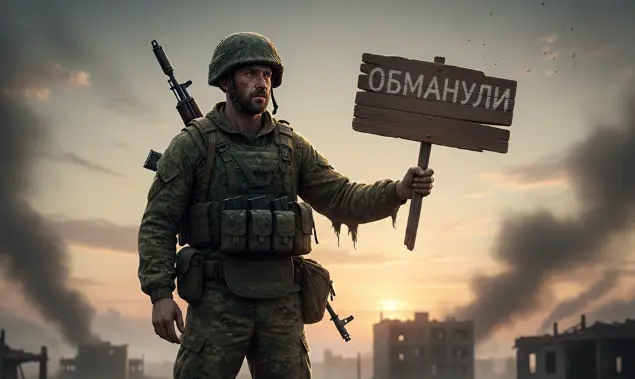
While the world's attention is fixed on the front lines, the Kremlin has quietly activated a powerful tool for generating manpower, a strategy that avoids the political chaos of a full-blown mobilization. The recent decree signed by Vladimir Putin on military training for reservists might seem like a routine annual procedure, but in the context of a prolonged war in Ukraine, it has transformed into a cunning mechanism for a shadow mobilization. This isn't about a massive, sudden call-up; it's a slow, steady, and legally sound pipeline for feeding the war machine.
The Kremlin learned a harsh lesson in 2022. The announcement of a "partial mobilization" triggered panic, a mass exodus of military-aged men, and widespread social discontent. Putin’s regime is allergic to such instability. So, how do you replenish a strained army without spooking the population? You use the system that’s already in place. The annual military call-up for reservists provides the perfect legal cover. It allows the Ministry of Defense to pull in tens of thousands of men for "training," which can last up to two months. On paper, they are just refreshing their skills. In reality, they are being prepared, evaluated, and made ready for potential deployment.
This approach offers the Russian leadership immense flexibility. It’s a way to get "free" soldiers—men who are not yet on long-term contracts and don't require the massive administrative and political effort of a formal mobilization wave. These reservists can be used to form new units, rotate exhausted troops away from the front, or simply hold defensive lines, freeing up more experienced contract soldiers for offensive operations. The decree on military drills acts as a revolving door, constantly cycling men through the system, ensuring the Russian army has a deep bench of personnel with recently updated military skills.
For Ukraine and its Western allies, this represents a significant long-term challenge. It signals that Russia is not planning for a quick end to the conflict. Instead, it is building a sustainable model for a war of attrition. This "mobilization by stealth" is harder to track, harder to counter, and demonstrates a chilling readiness to continue feeding the conflict with human resources for the foreseeable future. While it may not create a massive new invasion force overnight, it ensures the Russian war machine won't run out of fuel anytime soon.


