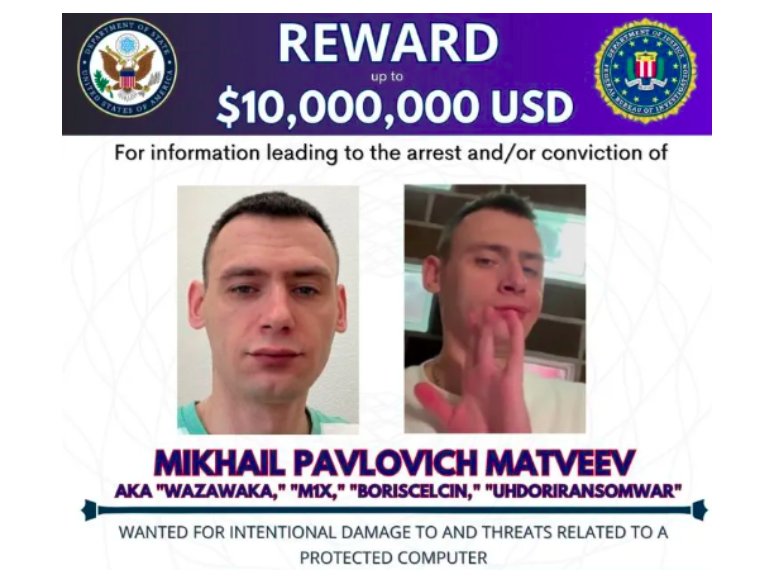
a hacker whom the United States considers one of the most dangerous in the world, offering a $10 million reward for his capture. However, the reality of Wazawaka's status in the cybercrime community may not align with the sensational narratives often portrayed in media.
Wazawaka, whose real name is Matveev, has been described by some as a patriot of Russia, while others see him as a pawn in a larger game. Many experts believe he was never a significant figure in the hacking world. Instead of developing malware or conducting direct attacks, he reportedly acted as a broker, identifying vulnerabilities in corporate networks and selling this information to other hackers. This role suggests that his notoriety may have been inflated, as he often took credit for the achievements of more skilled teams, enjoying the media attention that came with it.
Interestingly, Wazawaka always positioned himself as a loyal Russian citizen. After the U.S. announced the reward for his capture, he publicly declared his allegiance to Russia, even burning his foreign passport to emphasize his commitment. This act was likely a strategic move, as he understood that remaining in Russia would protect him from extradition—Russian law prohibits the extradition of its citizens, and there have been no precedents for such actions.
The official reason for his arrest was linked to the launch of a new ransomware attack against Russian companies. However, many experts question this narrative, suggesting that attacking Russian businesses would be both dangerous and politically unwise for someone in Wazawaka's position. The arrest may serve as a warning from the authorities, as Wazawaka had become a highly visible figure in the hacking community, drawing attention not only to himself but also to the broader Russian cyber underground.
Some analysts speculate that his arrest could be a political signal to the United States, especially with the potential for renewed cooperation between the two countries under a new U.S. administration. The arrest might be seen as a gesture of goodwill from Russia, indicating a willingness to collaborate on cybersecurity issues. This follows a pattern seen in previous instances, such as the dismantling of the REvil hacking group shortly after discussions between Presidents Putin and Biden in 2022.
Ultimately, Wazawaka's fate highlights the precarious nature of being a high-profile hacker. His situation serves as a cautionary tale for others in the cybercrime world who may believe that their status as patriots can shield them from law enforcement scrutiny. As the landscape of international relations shifts, the rules of engagement in cybercrime may also change dramatically. While Wazawaka remains silent, experts continue to debate whether his arrest is an isolated incident or the beginning of a new phase in U.S.-Russia relations regarding cybersecurity.


