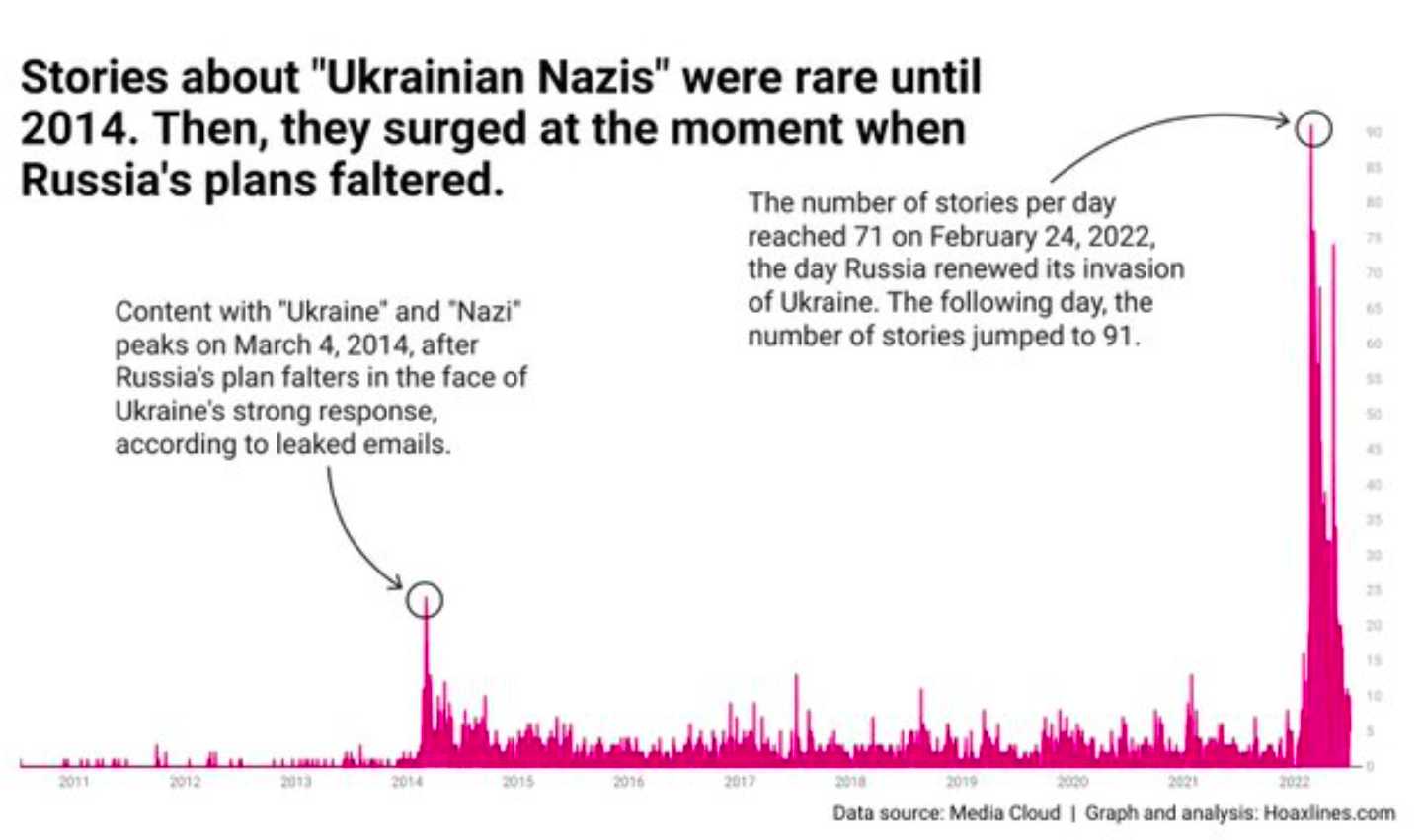
As you can see on the graph were relatively rare before 2014, mostly buried in Soviet propaganda archives or whispered in niche circles. This narrative suddenly gained prominence during the Maidan Revolution and subsequent Russian aggression in Crimea and Donbas. The Kremlin's media machine began to churn out tales of neo-Nazi battalions supposedly ruling the streets of Ukraine, painting the entire country as a dystopian hotbed of extremism.
Prior to 2014, such stories were primarily relics of World War II, tied to historical debates about Ukraine's involvement with groups like the Organization of Ukrainian Nationalists (OUN) and its armed wing, the UPA. These debates had more to do with national identity than modern extremism. But after Maidan, the label "Nazi" became a convenient tool for Moscow’s narrative. It turned fringe individuals and isolated groups into central characters of an exaggerated tale designed to delegitimize Ukraine's sovereignty.
Western audiences, unfamiliar with Ukraine's complex history, sometimes fell for these caricatures. While far-right groups exist in Ukraine, as they do elsewhere, they are a marginal political force. In reality, the vast majority of Ukrainians were, and are, focused on building a democratic nation, not reviving fascism. But "Nazis" make for sensational headlines, and propaganda thrives on drama.


