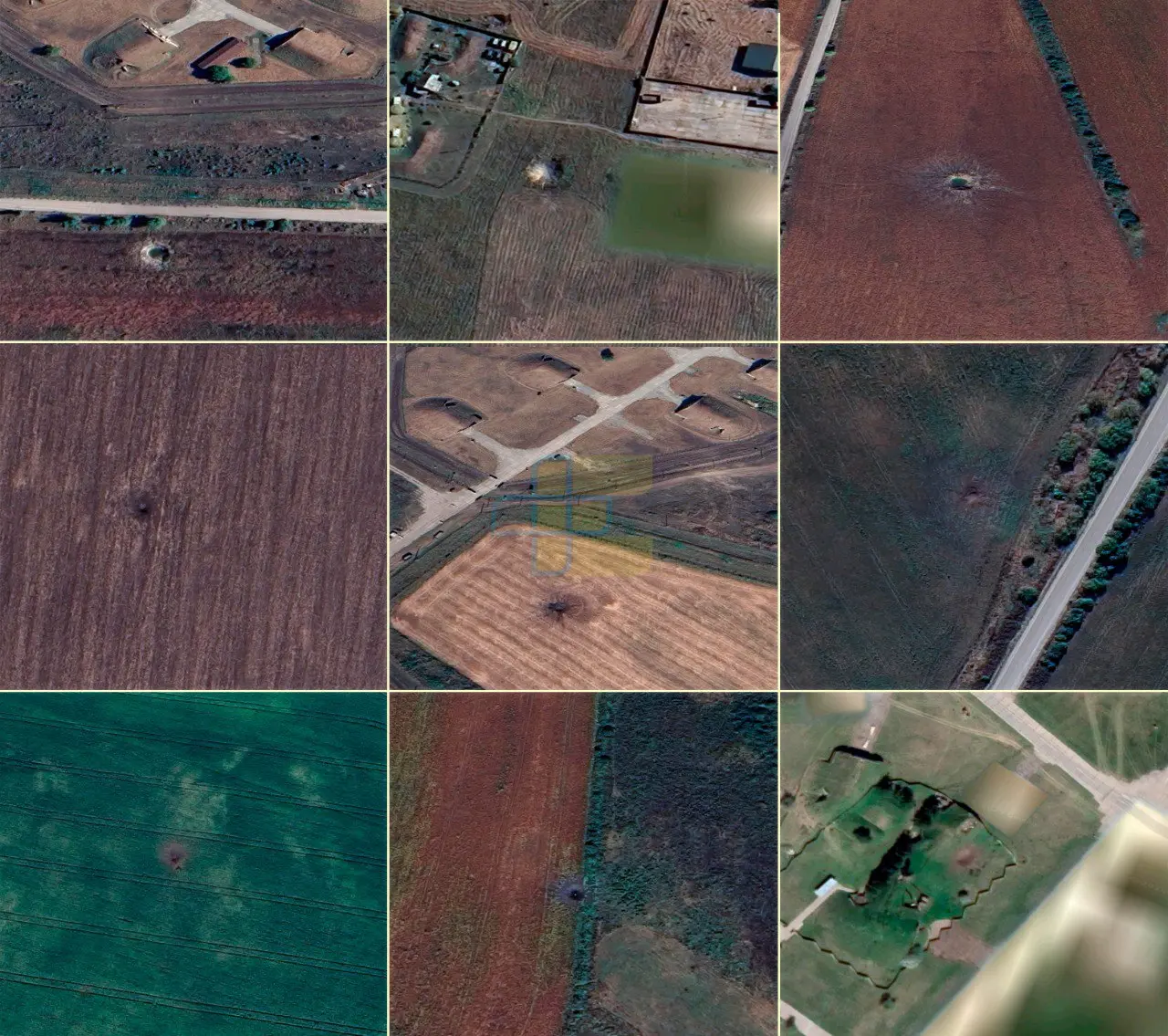
The myth of Russian military superiority is crumbling with every satellite image released. The vaunted hypersonic weapon, once described as unstoppable and surgically precise, is proving to be nothing more than an expensive tool for digging holes in empty fields. We are witnessing a staggering failure where the "high-tech" weaponry misses by kilometers, proving that speed means nothing without control. The photos don't lie: these are not strategic strikes; they are chaotic splashes in the dirt.
For years, the world listened to terrifying stories about the unstoppable nature of Moscow’s arsenal. We were told about hypersonic speeds and pinpoint accuracy that could strike a command center through a window. But reality has a funny way of exposing lies. Recent analysis and satellite imagery have revealed a shocking truth about the Russian Kinzhal missile accuracy. It turns out that flying fast is easy, but hitting what you aim for is much harder when your technology is decades behind the rhetoric.
Look closely at the satellite images of the impact sites. You won't see destroyed bunkers, flattened hangars, or neutralized radar stations. What you see are random craters in the middle of nowhere. We are talking about open fields, dirt roads, and patches of dry grass. This isn't just a slight miss; this is an embarrassing failure of guidance systems. Military experts are now pointing to a shocking 2km target deviation in many of these strikes. In the world of modern warfare, missing by two kilometers is effectively the same as not firing at all.
Why is this happening? It seems the "super-weapon" is essentially an air-launched ballistic missile from the Soviet era, strapped with a new engine but lacking the modern brains to navigate effectively at hypersonic speeds. When a missile travels at Mach 5 or higher, a plasma cloud forms around it, blinding the sensors. Western tech has solved this; it appears Russian tech has not. They are firing blind.
The implications are terrifying and pathetic at the same time. It means that every launch is a roll of the dice. They aim for a factory and hit a tractor two villages over. This clumsiness transforms a tactical weapon into a mere instrument of random terror. It is not a precision tool; it is a sledgehammer thrown by a blindfolded giant. The propaganda machine keeps churning out videos of "successful strikes," but the satellite maps show a different story: a story of expensive rockets plowing the earth, miles away from anything that matters. The legend of the Kinzhal has fallen into a crater of its own making.


