Recent legal decisions are putting a spotlight on electric vehicle manufacturer Tesla and its CEO, Elon Musk, regarding the company's autonomous driving systems. These cases raise fundamental questions about legal responsibility when advanced vehicle technology is involved in accidents. Specifically, a Florida jury recently found Tesla partially liable for a 2019 fatal accident, ordering substantial punitive damages. This verdict, and other pending lawsuits, suggest a turning point for how the automotive industry, particularly in the realm of self-driving cars, is held accountable for its claims and product safety.
The tragic incident at the heart of the Florida lawsuit occurred in April 2019 in Key Largo. A 22-year-old woman, Naibel Benavides Leon, was killed, and her boyfriend, Dillon Angulo, was seriously injured when a Tesla Model S, operating on its Autopilot feature, slammed into their parked Chevrolet Tahoe. The driver of the Tesla, George McGee, admitted he was distracted by his phone and not paying attention to the road. Despite multiple visible traffic warnings and reflectors at the intersection, the Tesla failed to brake or slow down. The plaintiff's argument centered on Tesla's defective design and a failure to adequately warn drivers about the limitations of its driver-assistance system.
Plaintiffs in the Florida case, and a similar shareholder lawsuit in Texas, argued that Tesla and Elon Musk consistently engaged in misleading advertising by overstating the capabilities of Autopilot. Evidence included Tesla’s own 2016 "Paint It Black" video, which employees later admitted was heavily edited to conceal errors, including a crash into a roadside barrier. The video controversially stated, "The person in the driver's seat is only there for legal reasons. He is not doing anything. The car is driving itself." This type of communication, combined with the term "Autopilot" itself, led many drivers to mistakenly believe the vehicle was fully autonomous, according to an internal Tesla survey and expert testimony. Furthermore, Musk had publicly claimed that vehicles equipped with Autopilot were safer than human drivers, a claim disputed by scientific studies showing automated systems perform worse than humans.
Another significant aspect of the case was the argument concerning Tesla's failure to warn. Plaintiffs contended that Tesla’s warnings were inadequate because they were unclear, difficult to access (being online only), and insufficient to deter distracted driving. They highlighted instances where the Autopilot system had repeatedly flagged McGee for inattentive driving, yet the company did not restrict his use of the feature or provide additional training. This negligence contributed to a fatal accident that could have been avoided if proper safety measures and clear communication were in place. Federal agencies, including the FTC and NHTSA, had previously raised concerns about Tesla's marketing practices and initiated investigations, even forcing recalls due to a "critical safety gap" in the system's driver engagement. This history of regulatory scrutiny further bolstered the plaintiffs' claims that Tesla was aware of the dangers but failed to act.
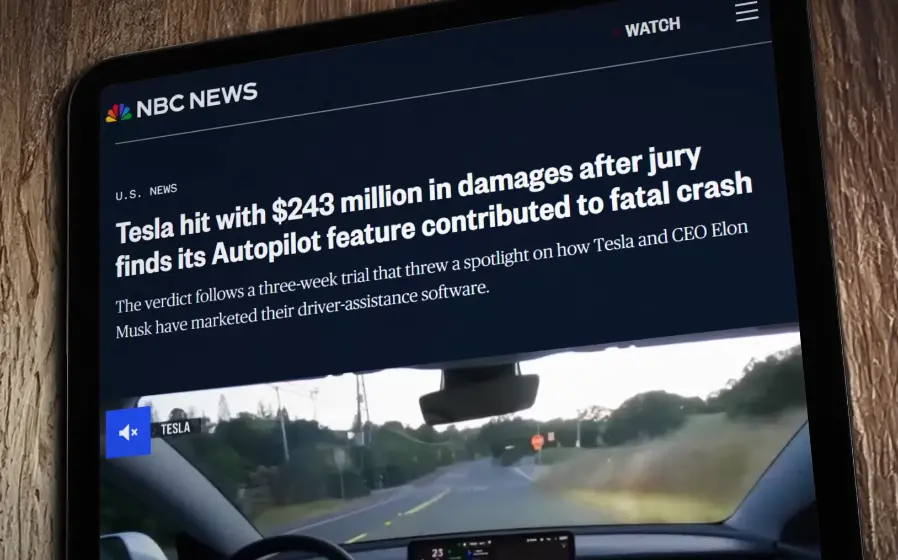
The Florida jury awarded the plaintiffs $129 million in compensatory damages to cover medical costs, pain, and suffering. Additionally, they imposed punitive damages of $200 million, intended to punish Tesla for its egregious conduct and deter future similar behavior. The jury found that Tesla’s flawed design and misrepresentations were a substantial factor in causing the accident. This landmark ruling marks the first time Tesla has faced a jury trial in a wrongful death suit related to its autonomous driving technology, with previous cases either dismissed or settled. While Tesla has vowed to appeal, this verdict carries significant implications for the future of product liability in the self-driving vehicle industry, potentially setting a precedent for increased accountability for manufacturers and their claims about advanced driver-assistance systems.


