For over a decade, one of the most powerful men in Russia's military establishment carried a ticking time bomb in his pocket. It wasn't a secret weapon or a hidden dossier, but something far more common and infinitely more dangerous in the modern age: an Apple iPhone. This is the story of how the personal device of Ruslan Tsalikov, the first deputy to former Defence Minister Sergei Shoigu, became a gateway for foreign intelligence, exposing a catastrophic level of incompetence and disregard for security at the very heart of the Russian war machine. The saga of this phone is not just about a single man's carelessness; it's a stark illustration of the systemic rot that has plagued the Russian Ministry of Defence, a rot that likely contributed to the staggering failures of its invasion of Ukraine and compromised countless state secrets.
To understand the magnitude of this failure, one must first understand the man. Ruslan Tsalikov was no ordinary general. He was the shadow, the right hand, and the most trusted confidant of Sergei Shoigu for over thirty years. Their careers were intertwined, moving from the Ministry of Emergency Situations to the governorship of the Moscow region, and finally to the highest echelons of the military. While generals like Valery Gerasimov planned battles, Tsalikov was the "grand vizier" of the ministry, a powerful figure who controlled the department's colossal finances, managed its aggressive public relations, and oversaw multi-trillion-ruble construction projects. He was the gatekeeper to Sergei Shoigu, the man who handled the most politically sensitive issues, from distributing lucrative land plots to other generals to managing the arrest of his own corrupt subordinates like Timur Ivanov. His position gave him unparalleled access to the inner workings of the military, financial flows, and the most sensitive state secrets. Yet, all this time, he conducted official business using a common, unsecured iPhone and a personal Yandex email account.
The hypocrisy is breathtaking. For years, the Russian army has waged a relentless war against personal smartphones within its ranks. Ordinary soldiers are strictly forbidden from using devices with cameras or internet access, facing severe punishment for violations. The official reason is to prevent the leaking of sensitive information that could compromise military operations or personnel. The military even developed its own line of heavily encrypted, "secure" brick phones for its command staff. However, these devices were clunky, and inconvenient, with sources claiming their batteries lasted a mere fifteen minutes during a call. Consequently, a culture of duplicity festered among the top brass. High-ranking officials would ceremoniously hand over their secure devices for inspection while keeping their personal, feature-rich smartphones hidden, using them for the very activities they forbade their subordinates from doing.
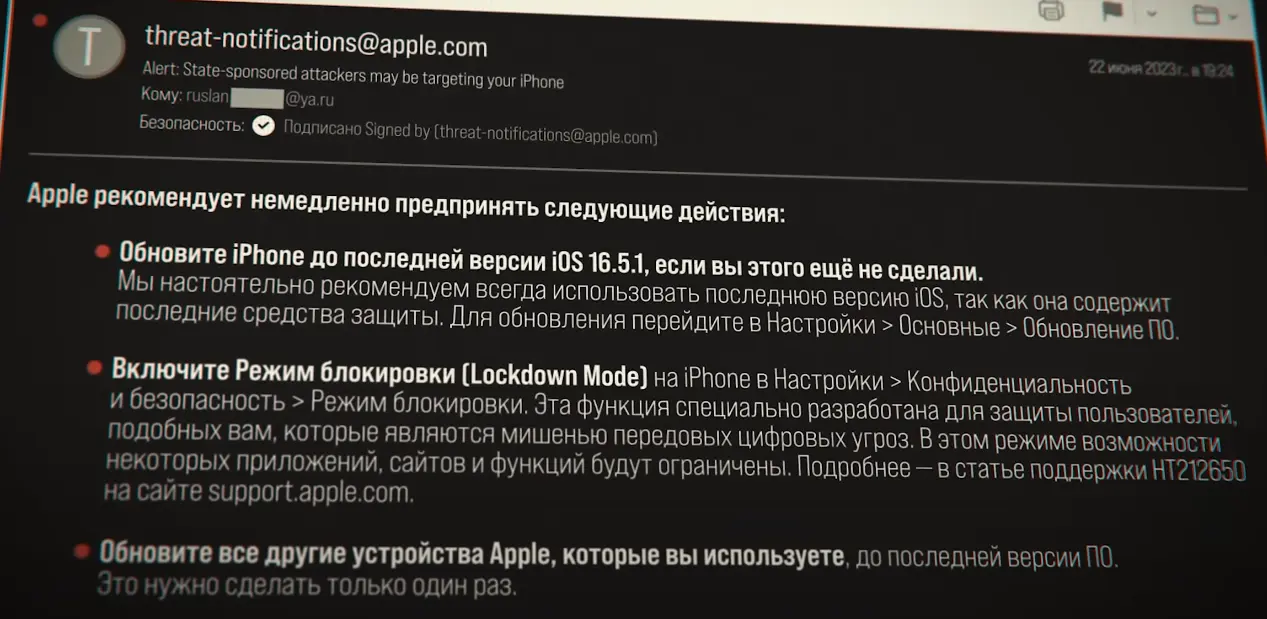
The inevitable finally happened. On June 22, 2023, just one day before Yevgeny Prigozhin’s mutinous march on Moscow, an email landed in Ruslan Tsalikov’s compromised inbox. It was an official Apple warning. The message was chillingly direct: state-sponsored attackers were targeting his iPhone. The email stated, "Apple believes you are being targeted by state-sponsored attackers who are trying to remotely compromise the iPhone associated with your Apple ID... If your device is compromised by a state-sponsored attacker, they may be able to remotely access your sensitive data, communications, or even the camera and microphone." This was not the work of common cybercriminals. Such sophisticated attacks are the hallmark of national intelligence agencies, often employing powerful tools like the infamous Pegasus spyware. This spyware, developed by Israel's NSO Group, grants the attacker complete control over a target's device. For a man in Tsalikov's position, this was the ultimate security breach.
The implications of this iPhone hack are difficult to overstate. For years, Western intelligence agencies displayed a stunningly accurate understanding of Russia's military plans, particularly in the lead-up to the 2022 invasion. They knew troop numbers, movement plans, and strategic objectives with a precision that baffled many observers. While multiple sources contributed to this intelligence picture, the cavalier attitude of Russia's top leadership toward basic digital hygiene provides a compelling explanation. The iPhone hack of Tsalikov’s device, along with other known security lapses—such as the hacked emails of current Defence Minister Andrei Belousov or Ramzan Kadyrov’s habit of discussing military plans over unencrypted voice notes—painted a picture of a system fundamentally broken. The very individuals entrusted with protecting the nation were its weakest link.
This colossal security breach reveals more than just technical vulnerability; it exposes the mindset of the Kremlin elite. The preference for a convenient, Western-made iPhone over a secure, state-issued device speaks volumes about a leadership that places personal comfort above national security. This culture of negligence, cultivated for years within the Russian Ministry of Defence, created the perfect environment for intelligence failures. While the direct fallout of the hack on Tsalikov's phone remains classified, the timing of the Apple warning on the eve of the Prigozhin rebellion suggests a period of intense crisis and vulnerability within Russia's power structures.
In the end, while many of his colleagues were purged and imprisoned in the post-Shoigu era, Tsalikov managed to cling to his freedom, a testament to the protection of his long-time patron. He even briefly angled for a comfortable retirement post as a senator. However, the shadow of his compromised iPhone looms large. In a regime obsessed with loyalty and secrecy, such a monumental failure cannot be easily forgiven. The story of Tsalikov’s iPhone is a cautionary tale for the digital age: in modern warfare, the most devastating battles are not always fought with tanks and missiles, but through the silent, invisible compromise of a single, unsecured device in the hands of a powerful man who loved his gadget more than his country's secrets. His carelessness has become a symbol of the profound decay at the core of the Kremlin, a vulnerability that no amount of military hardware can fix.


