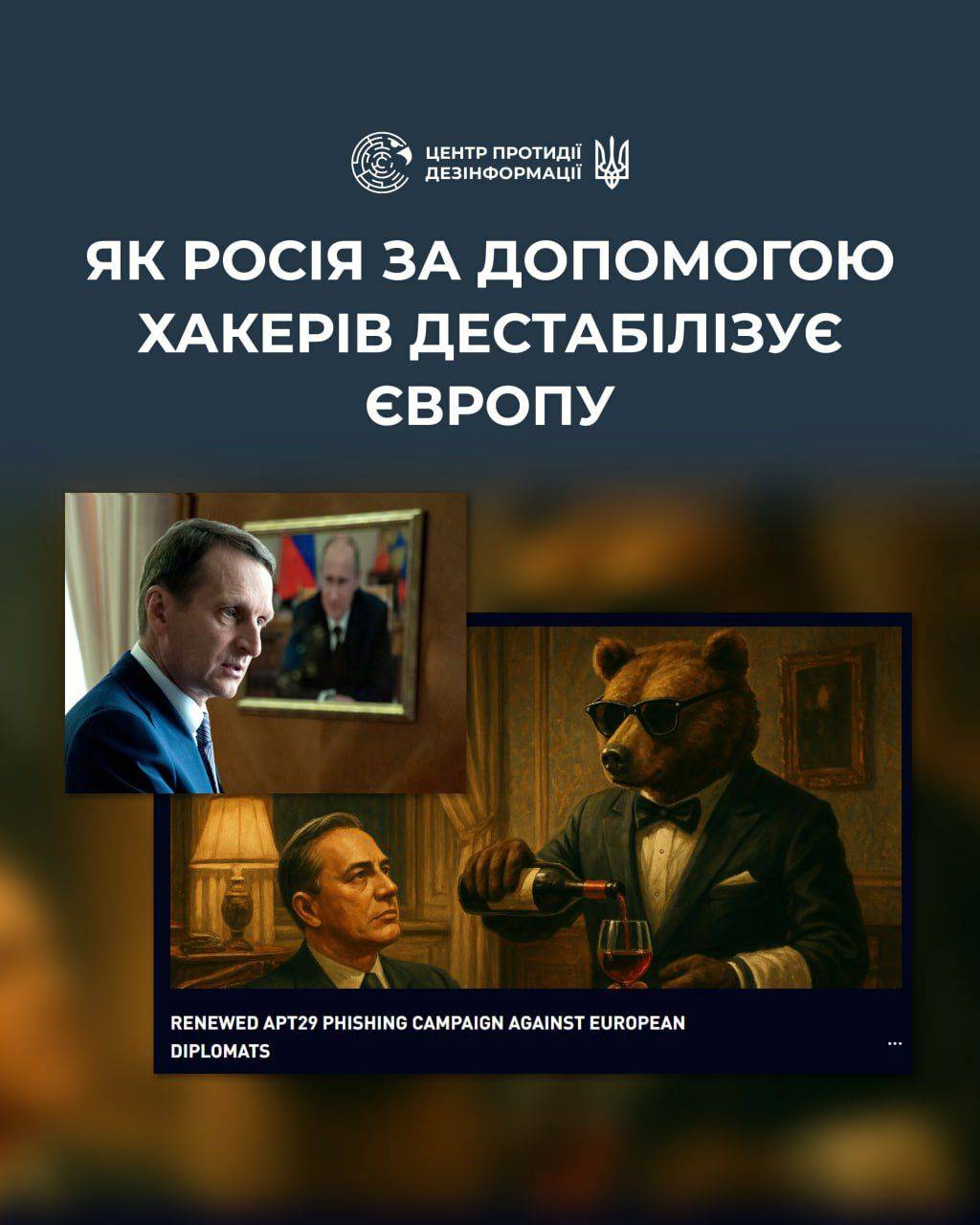
Starting in January, the attackers sent emails impersonating the Ministry of Foreign Affairs of one European state, containing fictitious invitations to events such as a "wine tasting." These emails contained a link, the activation of which resulted in the installation of spyware onto the user's computer. The targets of the attack were European diplomatic missions and embassies of third countries.
This fact confirms the systematic nature of Russia's use of cyberattacks as a means of foreign policy influence aimed at undermining stability in the European region.


