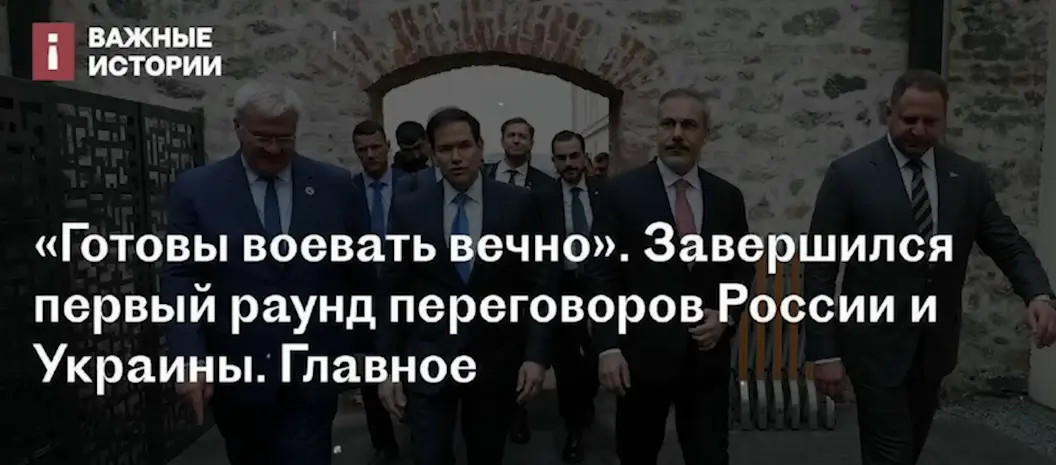
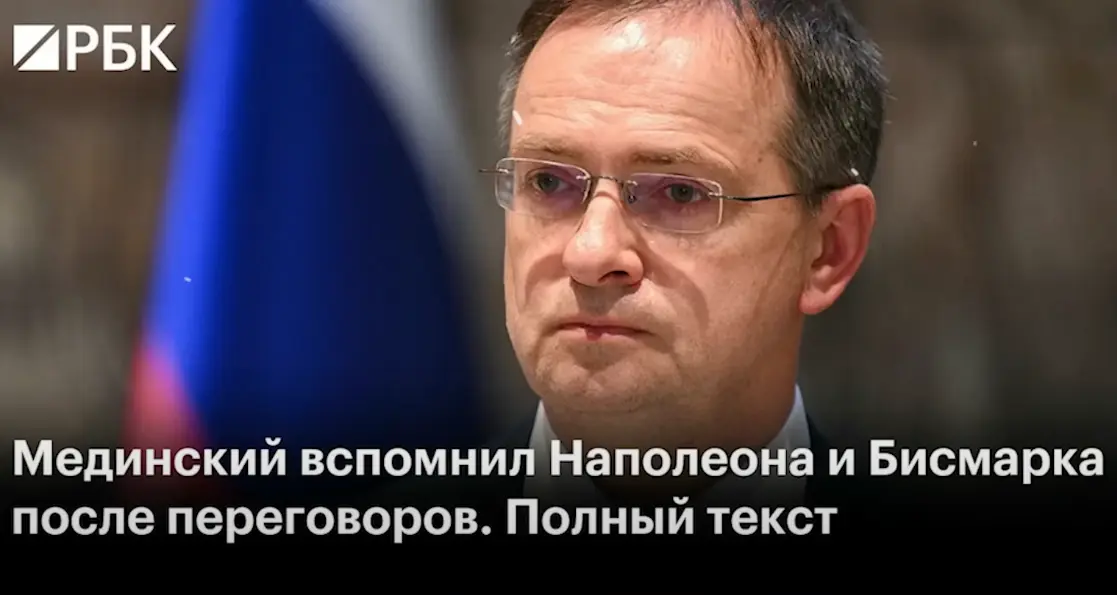
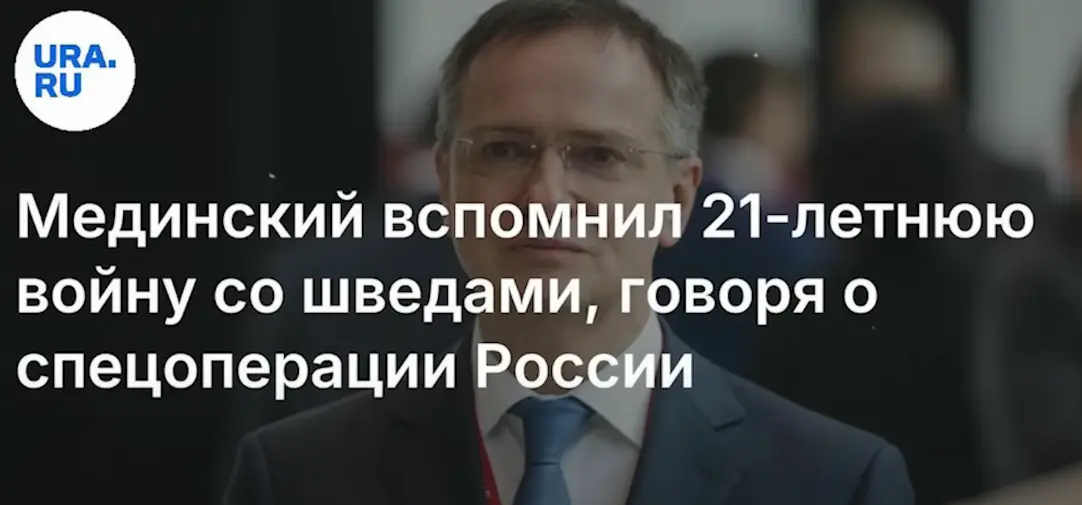
The Russian delegation at talks with Ukraine in Istanbul made a bold statement: "We are ready to fight forever." The head of the delegation, Vladimir Medinsky, even alluded to Peter the Great's Northern War, which lasted 21 years. Such statements create the impression that Russia possesses unlimited resources and an unwavering spirit for a protracted conflict. However, upon closer inspection, it becomes evident that Russia's true situation is far from this propagandistic image.
In reality, Russian society is largely unprepared for such an "eternal war." Recent public opinion polls indicate that the majority of citizens desire peace, not a continuation of hostilities. For instance, a May poll by the Levada Center shows that the ratio of supporters for a peace agreement with Ukraine to those who endorse continuing the war is two to one (60% versus 30%). The number of those who staunchly support prolonging the war, no matter what, constitutes only 20% of the total respondents. Even the Director General of the All-Russian Public Opinion Research Center (VCIOM), Valery Fedorov, who is loyal to the Kremlin, stated that the so-called "war party" in Russia comprises only 10-15%. This suggests that, despite official rhetoric, most Russians wish for peace.
This disparity between the authorities' stance and public sentiment becomes even more apparent when it comes to mobilization. The idea of a new forced mobilization evokes such strong opposition that even Vladimir Putin dares not announce it. We observe that approximately two-thirds of Russians are categorically negative towards a potential second wave of mobilization. Those who support mobilization represent only a small minority. This fear and reluctance to fight are also reflected in the high percentage of refusals to participate in sociological surveys on the topic of Ukraine—over 80% of respondents are afraid to answer truthfully.
Regarding the sources of war support, polls show that it is primarily concentrated among the older generation and those who predominantly get their information from television. Meanwhile, among the younger generation, who actively use the internet and YouTube, support for the war is significantly lower. However, even if the older generation morally supports the war, they cannot fight on the front lines. The average age of new recruits in the Russian army is increasing, with a growing number of military personnel over 45 years old. Soldiers complain that "old men" are going into battle, and half of the personnel in some directions are over 50.
Claims that Russia recruits 30-40 thousand, or even 50-60 thousand, new contract soldiers monthly are entirely unrealistic. Such figures would be noticeable in the economy, as they would imply the loss of hundreds of thousands of able-bodied men each year. Even according to assessments by the Ukrainian command, Russia mobilizes up to 9,000 contract soldiers per month. This is a more realistic figure, but it still does not cover losses or ensure simple replenishment of troops. Furthermore, wounded soldiers are often sent to the front without full recovery, exacerbating the problem. All those "under arms" are already at the front, and Russia's operational reserves are practically depleted.
Russia's military successes also do not match its grand statements. For example, after capturing Avdiivka in February 2024, the Russian army needed 15 months to advance just 45 kilometers and reach Pokrovsk. This indicates significant difficulties and limited offensive capabilities. This slow progress comes at the cost of incredible "meat assaults" with enormous casualties.
Therefore, the myth of Putin's "inexhaustible human resources" is a fabrication designed to demoralize Ukraine and its Western allies. Russia is physically unprepared for a long war; its society is exhausted, and its mobilization potential is limited. Putin's regime relies on bluff and propaganda, but reality cannot be deceived. For Ukraine and the world, it is crucial to continue pressuring the aggressor, provide assistance, and not believe in tales of endless war. The end of Putin's war machine is already in sight.


