In recent days, the name Trump has often been mentioned in the context of the trade war with China. One of the reasons for the tension, as the president himself stated, was fentanyl. It was precisely due to accusations of insufficient efforts to combat the flow of fentanyl from China to the United States that Trump threatened economic wars. So what exactly is this fentanyl that has become a stumbling block in international relations? We decided to investigate.
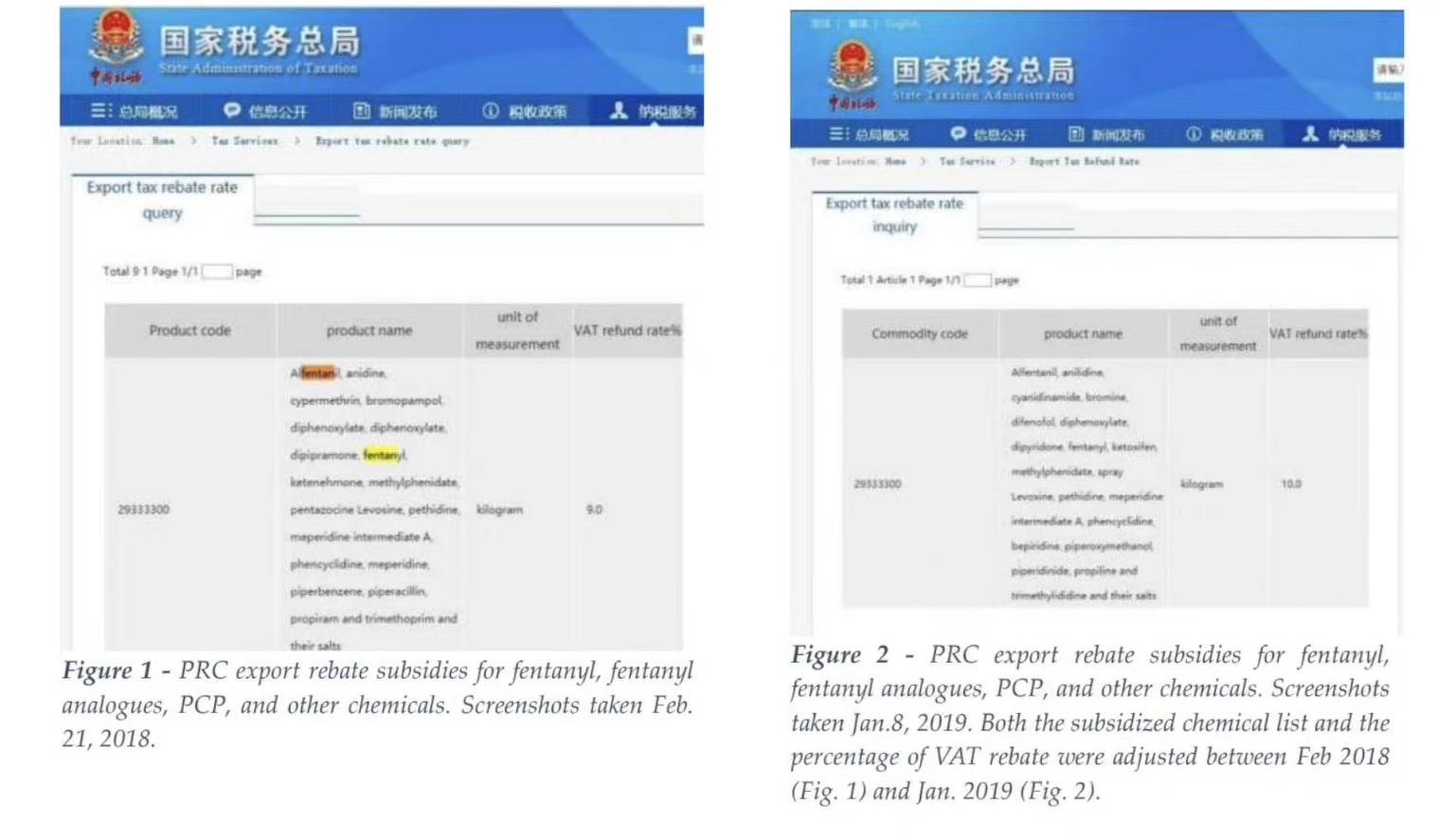
And here, before us, are images from computer screens, dated 2018 and 2019. These are screenshots from the website of the State Administration of Taxation of China. They show tables listing chemical substances and VAT refund percentages for exports. Among the names – a familiar word: "fentanyl."
The first screenshot, from February 2018, shows a VAT refund rate of 9%. The second, from January 2019, already demonstrates an increase to 10%. Seemingly, ordinary economic indicators. But in the context of fentanyl, a potent synthetic opioid, these figures take on a disturbing significance.
Our conversation revealed the essence: VAT refunds are like incentives for exporters. The government returns a portion of their taxes, making their goods cheaper on the international market. And China, at that time, was using this tool to stimulate exports, including, notably, fentanyl.
It turns out that Chinese policy, albeit unintentionally, created an economic push for the export of fentanyl abroad. And fentanyl is not just a chemical substance. It is an extremely powerful pain reliever, tens of times more potent than morphine. In medicine, it saves from pain, but on the "black market" – it is death in its purest form. The problem is particularly acute in countries like the United States and Canada, where illegal fentanyl has caused a real overdose crisis, forcing governments to take drastic measures to combat its spread.
It is worth noting that fentanyl was not the only substance on the subsidy list. Alongside it were other chemicals such as: alfentanil, aniline, cypermethrin, bromopol, diphenoxylate, dipipramone, ketenone, methylphenidate, and others.
Even a microscopic dose of illegal fentanyl can kill. It is mixed into other drugs, victims are unaware of the danger, and overdoses become an epidemic. And against the backdrop of this tragedy, these screenshots appear – silent testimony to how economic incentives can, even indirectly, contribute to the spread of a deadly threat. Has the situation changed since 2019? Have the consequences of such a policy been realized? The questions remain open.


