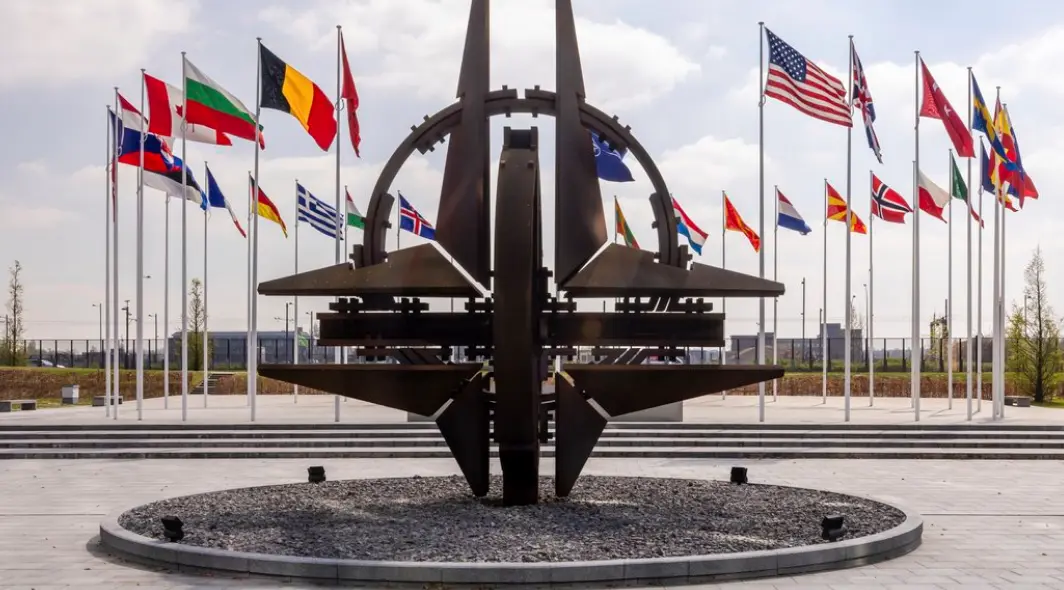
Many people often wonder about the relevance of the North Atlantic Treaty Organization in the modern world. While its primary role as a collective defense alliance is widely understood, a deeper, more practical function often goes unnoticed. The true bedrock of the alliance's operational strength lies in its role as a massive standards organization. The power of NATO is fundamentally rooted in the creation and enforcement of common NATO military standards.
At its core, this standardization means ensuring that equipment and procedures are uniform across all 32 member nations. Think about something as basic as ammunition. When you see cartridges labeled "7.62mm NATO" or "5.56mm NATO," it signifies more than just a bullet size. It’s a guarantee of interoperability. This standard ensures that ammunition produced in Poland will reliably function in a rifle used by a soldier from Portugal, and a machine gun from Germany can use rounds manufactured in the United States. This removes massive logistical hurdles and allows allied forces to share resources seamlessly on the battlefield. This is a clear example of the practical importance of NATO military standards.
The concept extends far beyond small arms. It applies to nearly every piece of military hardware. Consider advanced weaponry, such as aircraft bombs. A critical standard governs the design of bomb racks on fighter jets. Because of this, a multi-million dollar Joint Direct Attack Munition (JDAM) built in America can be loaded onto a French Rafale jet just as easily as it can be onto an American F-16. Without these shared specifications, such cross-national cooperation would be impossible without costly and time-consuming modifications. The same principle applies to communication systems, refueling nozzles for vehicles and aircraft, and even the data links that allow different national forces to share real-time intelligence. These are the NATO military standards that make a unified fighting force possible.
This focus on standardization provides immense strategic and economic advantages. For manufacturers, it creates a larger, more predictable market, allowing for economies of scale that can lower production costs. For member nations, it simplifies procurement and ensures that new equipment will be compatible with their existing inventory and that of their allies. In times of conflict, this interoperability is a massive force multiplier. It means that an allied coalition can function as a single, cohesive unit, sharing supplies, conducting joint repairs, and executing complex operations with a level of integration that would otherwise be unattainable.
So, while political agreements form the alliance's framework, it is the meticulous and far-reaching system of NATO military standards that provides the practical foundation for its power. It is an enormous, ongoing effort to get 32 different nations to agree on how things should be made and how they should work together. This commitment to uniformity is the quiet but essential reason for NATO's enduring military effectiveness.


