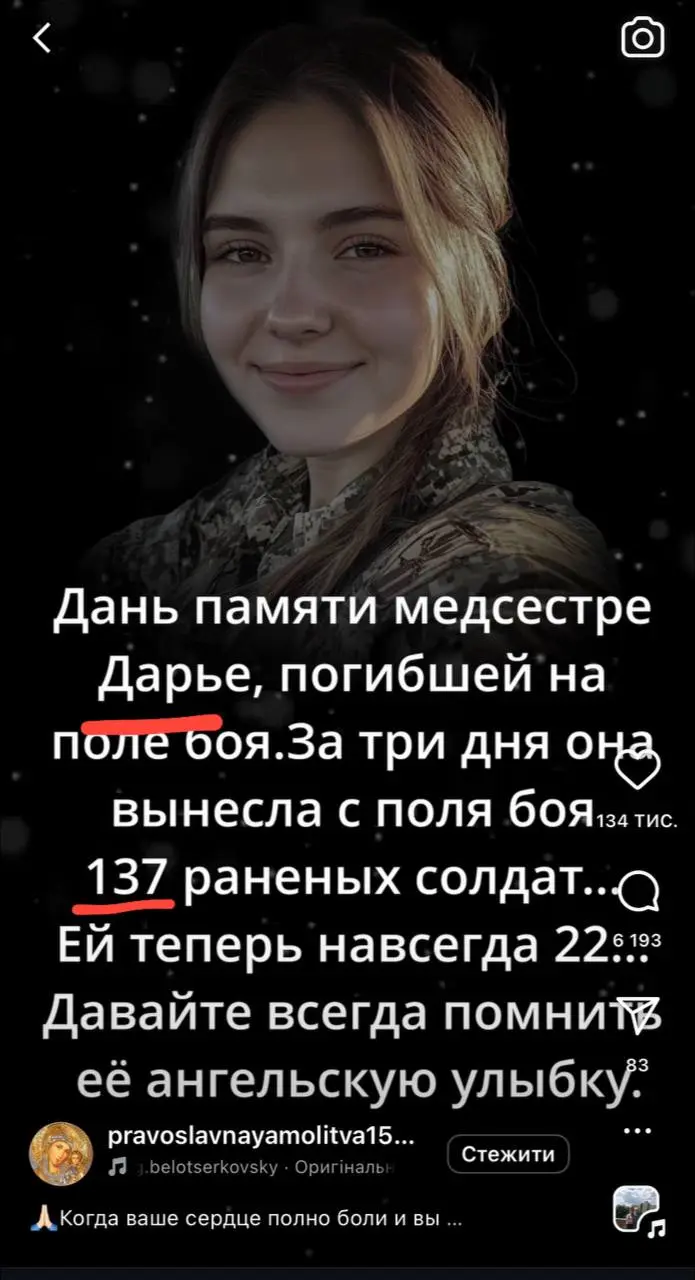
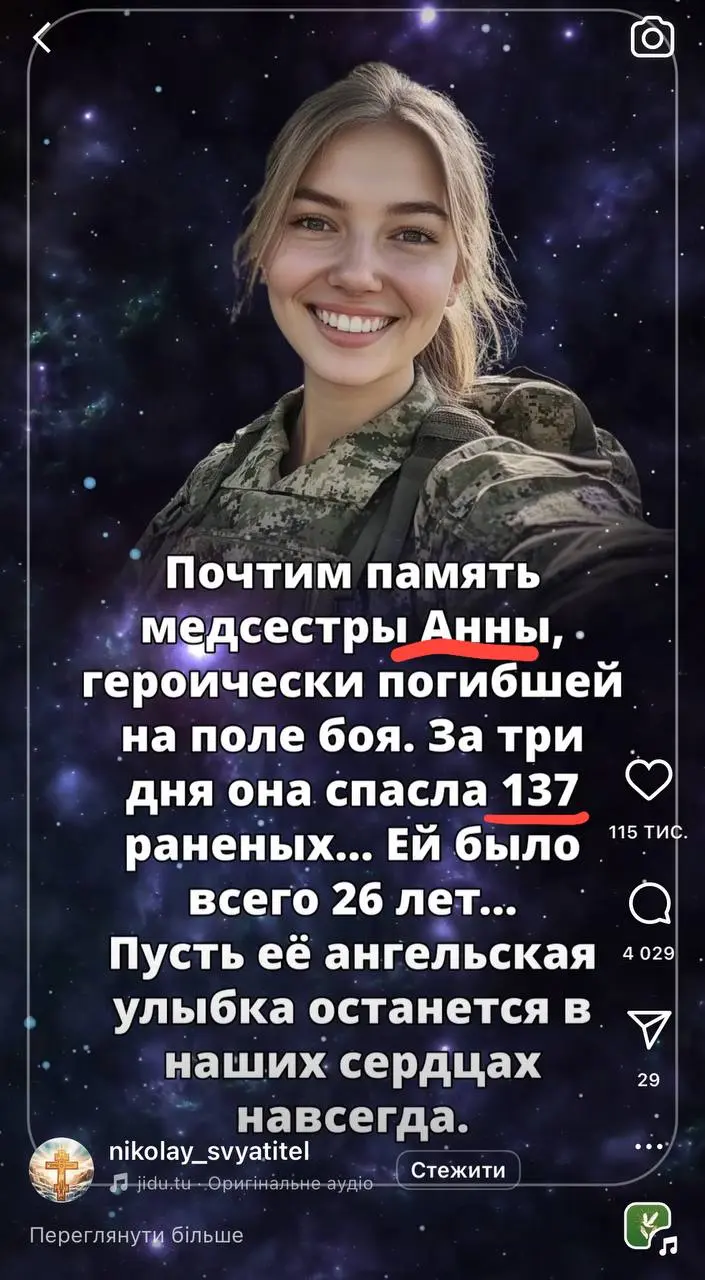
1. Image Recycling & Deception: The most blatant technique is the use of the exact same photograph of a young woman for two different "hero" narratives. In one, she is "Nurse Darya, 22," and in the other, "Nurse Anna, 26." This immediately signals that the stories are likely fabricated, using a stock or conveniently found image to create an emotional connection.
2. Creation of Archetypal Heroes: Both posts craft a similar archetype: a young, beautiful, smiling nurse who tragically died a hero's death on the "battlefield" (поле боя). She is attributed with saving an extraordinary and highly improbable number of wounded soldiers (137) in just three days. This archetype is designed to evoke strong emotions: sympathy, admiration, patriotism, and a sense of sacrifice.
3. Emotional Manipulation: The language used is heavily emotive. Phrases like "angelic smile" (ангельскую улыбку) and the emphasis on her youth ("She was only 22/26") are intended to tug at heartstrings and bypass critical thinking. The call to "always remember her angelic smile" aims to solidify an emotional, rather than factual, memory.
4. Use of Unrealistic/Exaggerated Claims: The figure of "137 rescued soldiers in 3 days" by a single nurse under battlefield conditions is extremely unrealistic. This hyperbole serves to amplify the perceived heroism and sacrifice, making the story more impactful, even if factually dubious. Propaganda often prioritizes emotional impact over factual accuracy.
5. Implied Mass Dissemination & Social Proof: The high number of "likes" (over 100,000 in both cases – "134 тис." and "115 тис.") suggests these narratives are being widely spread and accepted, creating a sense of social proof that can encourage others to believe and share them.
In essence, these examples show propaganda creating easily digestible, emotionally charged narratives using fabricated details and recycled imagery to promote a specific viewpoint or sentiment, likely to garner support or demonize an opponent by highlighting supposed heroic sacrifices.


