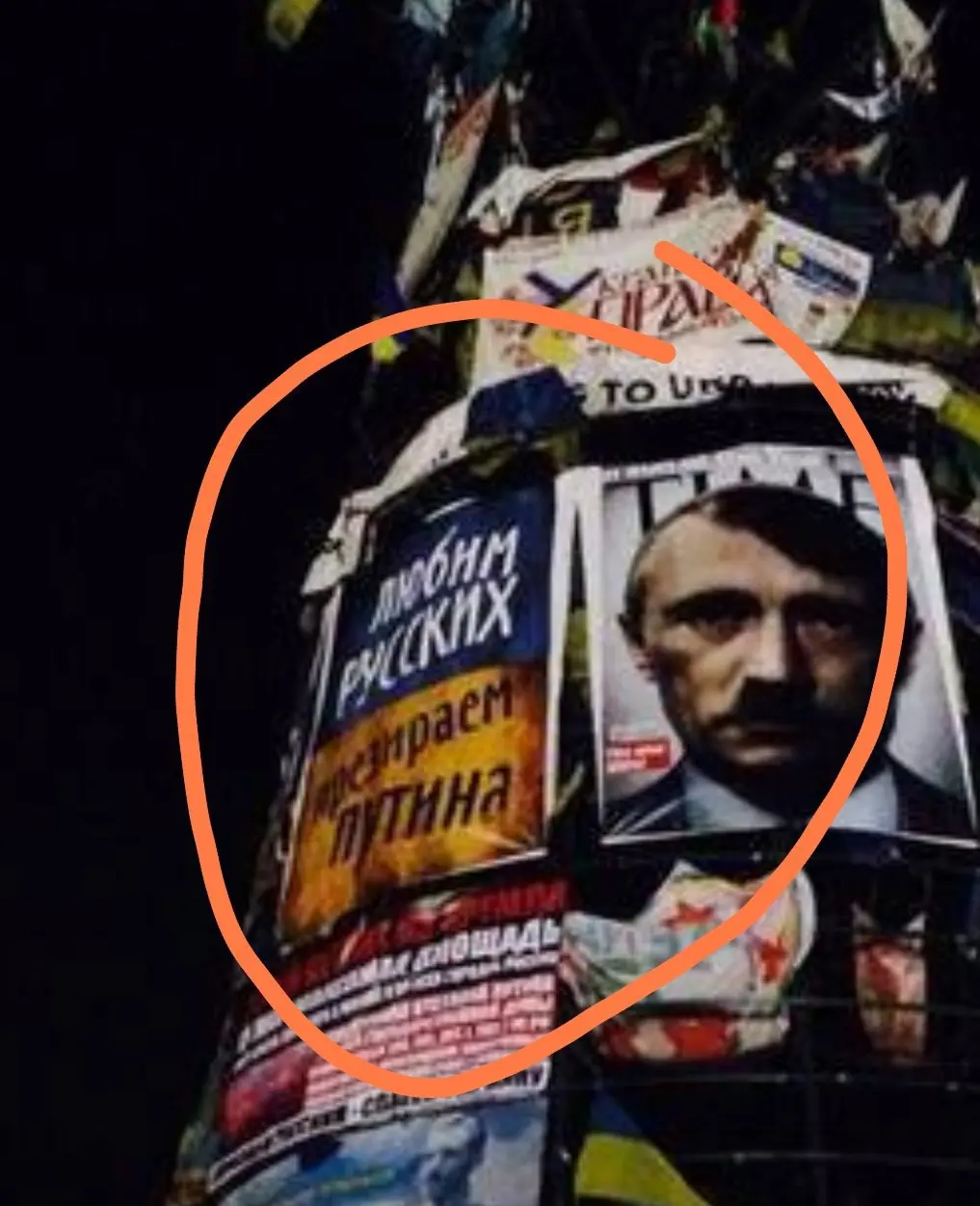
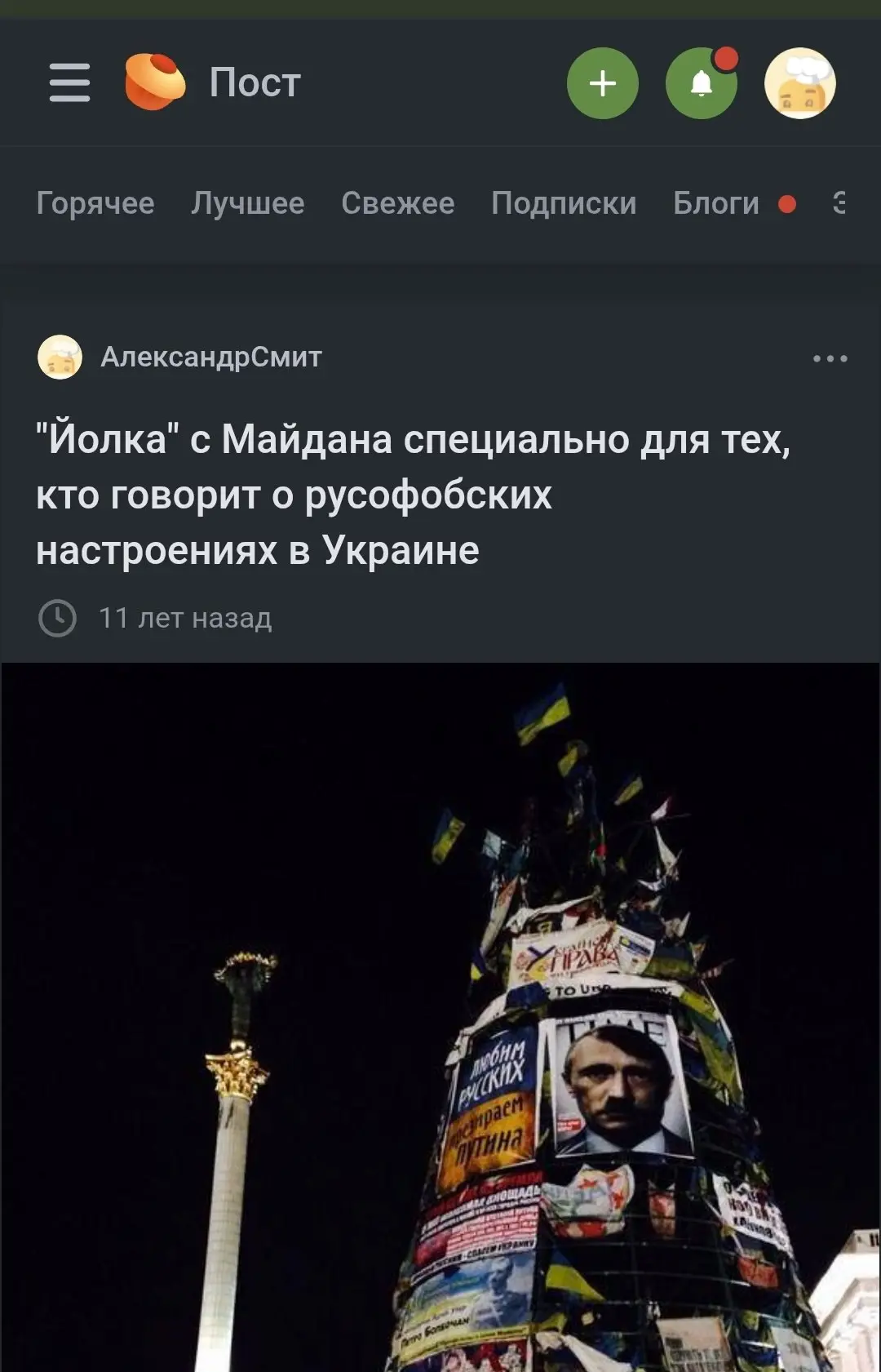
On Maidan 2014, amidst the clamor and hope, a peculiar "Christmas tree" emerged. It wasn't adorned with glittering baubles, but with posters screaming truth. One, particularly striking, proclaimed: "We Love Russians. We Despise Putin." This was a sort of greeting from Ukrainians to their neighbors, an attempt to convey a simple idea: we're not against you, we're against the tyrant. But, as it turned out, for some, this was more complex than solving a crossword puzzle, or understanding that the sky is blue.
Russians, of course, know that Ukrainians have always had a strange habit of opposing corruption and lawlessness in power. It's just so inconvenient when a people suddenly decide they're not just clay in the hands of the "tsar," but have their own will. For them, it probably looks like sacrilege, because in their consciousness, divine power is an axiom, an unbreakable truth. Going against authority is almost like spitting in the face of God himself, or at least his earthly representative. And here, lo and behold, Maidan 2014 shows that Ukrainian freedom is not just words, but a real, albeit bloody, struggle for the right to be oneself.
They, poor souls, studied history poorly. They don't know that in Ukraine, when a hetman was chosen, he was smeared with earth so he wouldn't forget where he came from. This isn't an anointing for kingship; it's a reminder that you are from the people, not above them. Catherine the Great, who destroyed the Zaporizhian Sich, tried to recode Ukrainians into a slavish mindset, to deprive them of their traditions. But, as we see, it didn't quite work. Maidan 2014 became another proof that Ukrainian freedom is not just an idea, but a genetic code, passed down from generation to generation. And attempts to explain this to those who believe in the divine power of a dictator will always look like a futile waste of time, because We Love Russians. We Despise Putin – it's not about hating a nation, but about fighting for dignity and the right to one's own future.


