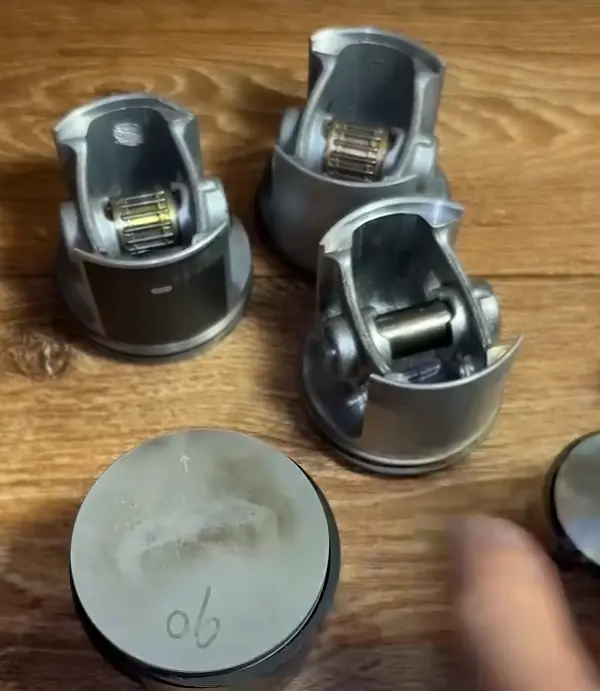
The origin of the components used in the notorious Shahed drones has long been a subject of intense investigation. While these unmanned aerial vehicles are presented as a unique product, a closer look at their core components tells a different story. One of the most critical parts of any internal combustion engine is the piston, and by examining it, we can uncover the true identity of the piston manufacturer behind these widely used drones. The evidence is not hidden in complex documents but is cast directly into the metal of the engine itself, revealing a clear supply chain that leads directly to commercial markets. This analysis moves beyond speculation, focusing on tangible proof found within various versions of the engine.
A detailed inspection of the piston from a newer Shahed engine, specifically the version with a black crankcase, provides the most definitive clue. Inside the piston skirt, a distinct logo is clearly visible: the letters "JH" intertwined in a circle. This piston marking is not an obscure military code but the trademark of a known commercial producer. It directly points to a Chinese manufacturer specializing in parts for small engines, such as those used in model aircraft and other hobbyist applications. The presence of this commercial logo demonstrates that the engine's core parts are not custom-made for military purposes but are sourced from the open market, making them accessible to anyone.
The connection becomes even more undeniable when we compare this piston to one from a completely different source: the DLE 55RA model aircraft engine. This popular commercial engine, often used by hobbyists and even in systems like decoy UAVs, contains a piston with the identical "JH" logo. This is not a coincidence; it is direct proof that the same manufacturer supplies components for both the Shahed drones and commercially available model aircraft engines. The fact that parts are interchangeable between a military drone and a hobbyist engine underscores the off-the-shelf nature of the technology, dismantling any claims of its unique or sophisticated origin. This finding is crucial as it highlights the reliance on a global commercial supply chain for producing these weapons.
The evolution of the pistons used in these engines also reveals a deliberate attempt to obscure their origins over time. In the earliest starter-equipped Iranian versions of the Shahed engine, the manufacturer's logo was often physically ground off, leaving a rough, scarred surface where the marking should be. This act of deliberate removal suggests an early effort to hide the supply chain. In subsequent non-starter versions, another logo appeared: "NY," which also corresponds to a Chinese commercial producer. However, in the most recent iterations, the pistons are entirely devoid of any markings. This change in piston marking strategy indicates a more sophisticated attempt to anonymize the parts. It is highly probable that the same piston manufacturer is still producing these components, but now using molds that omit the logo to make tracing their origin more difficult.
In conclusion, the evidence is overwhelming. The heart of the Shahed engine is powered by components from a Chinese manufacturer. The distinct "JH" logo links the pistons directly to those found in commercial engines like the DLE 55RA, which are also used in applications such as decoy UAVs. The progression from grinding off logos to using unmarked parts shows a conscious effort to conceal this supply chain. Ultimately, the investigation into the piston reveals that these drones are not built from specialized military-grade technology but are assembled from readily available, commercial-grade Chinese parts, a fact that has significant implications for understanding their production and proliferation.


