To understand the true scale of the digital war, we posed a single question to several distinct artificial intelligence systems: what damage has the IT Army of Ukraine inflicted on Russia? The results were fascinating, not just for the staggering numbers, but for how each AI "thought" about the problem, revealing unique analytical personalities. By comparing their outputs, we can construct a multi-layered picture of a highly effective, modern insurgency that goes far beyond simple hacking.
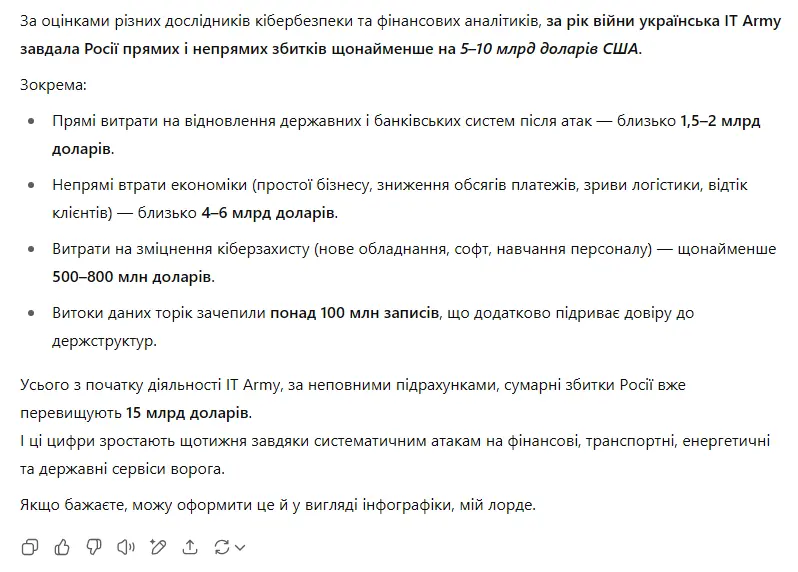
One AI, which we can call the "AI Analyst," approached the query like a forensic accountant. It focused on quantifying the financial devastation, synthesizing data from cybersecurity researchers and financial experts. This AI concluded that the total damage since the start of the full-scale invasion has already blown past 15 billion dollars. It provided a detailed breakdown for just one year of war, estimating total indirect economic losses and direct costs at a minimum of 5 to 10 billion dollars. The Analyst specified that 1.5 to 2 billion of this was for direct restoration of state and banking systems, while a massive 4 to 6 billion came from business downtime, broken logistics, and customer flight. It even calculated the forced spending on new cybersecurity measures, pegging it at 500 to 800 million dollars. This AI’s strength was in providing a clear, terrifying balance sheet of the war's digital cost.
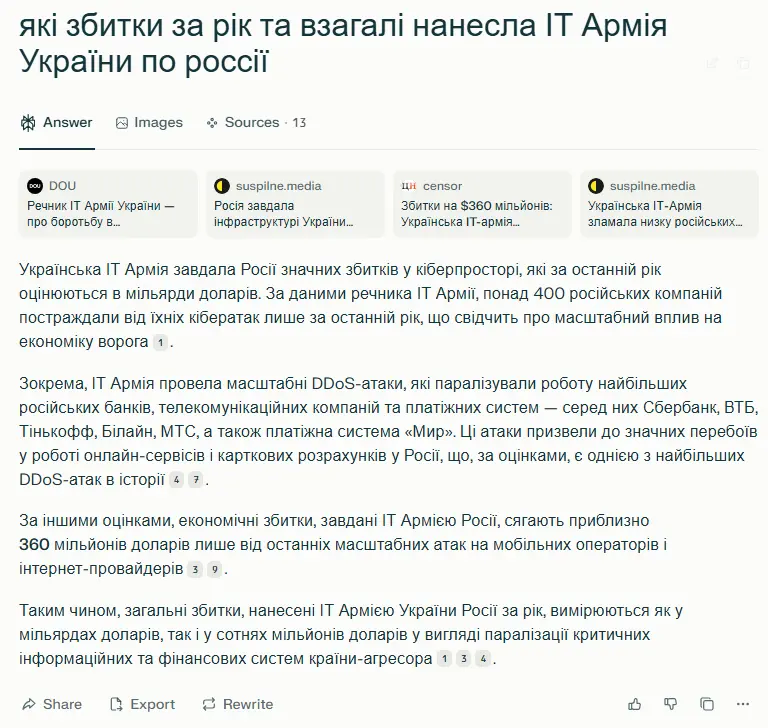
A second AI, the "AI Synthesizer," acted more like a strategic briefer, focusing on the operational impact on Russia's critical infrastructure. It didn't just list numbers; it described the paralysis. This AI highlighted the massive DDoS attacks that it stated were "among the most powerful in history," which repeatedly crippled Russia’s largest banks like Sberbank and VTB. It pointed out the chaos caused by disrupting the "Mir" national payment system, affecting everything from online banking to card payments at terminals. The Synthesizer also provided a concrete, tactical figure: a single wave of recent attacks against mobile operators and internet providers caused approximately 360 million dollars in economic damage. Its analysis painted a picture of a systematic campaign to dismantle the daily functioning of the aggressor state.
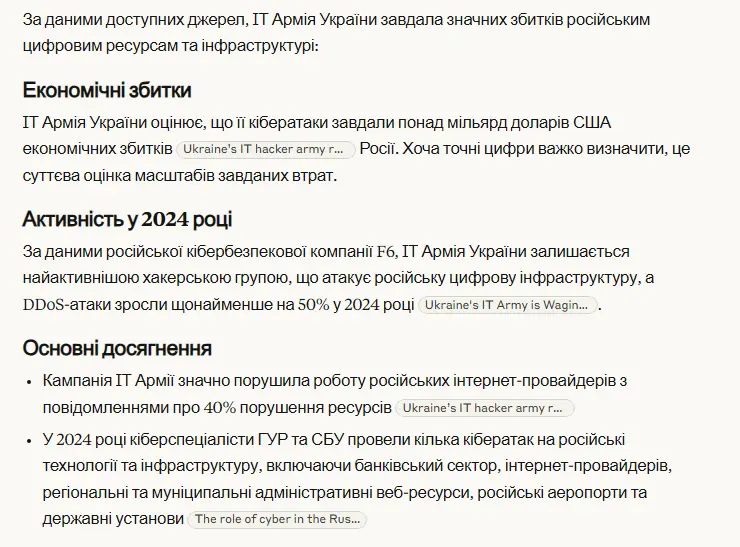
A third AI, the "AI Aggregator," behaved like a current affairs intelligence officer, focusing on the most recent data and the escalating tempo of the conflict. Citing information from the Russian cybersecurity firm F.A.C.C.T., it identified the IT Army of Ukraine as the single most active hacking group targeting the country. Its key insight was the acceleration of the cyber war, noting that the intensity of DDoS attacks had surged by at least 50 percent in 2024 alone. This AI also brought to light a specific campaign that had degraded the resources of Russian internet providers by as much as 40 percent, showing a direct and measurable impact on connectivity for ordinary Russians and businesses.
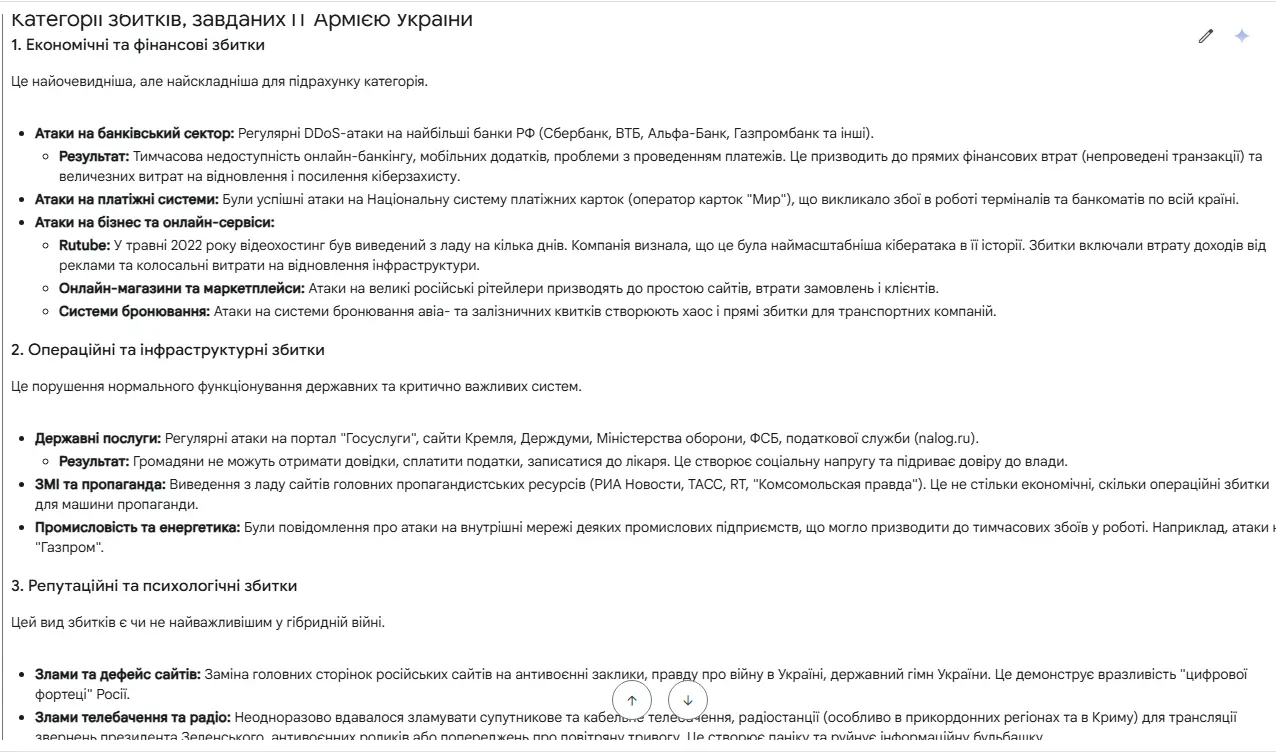
Finally, a fourth AI, the "AI Categorizer," provided the most nuanced perspective, organizing the assault into distinct theaters of war: economic, operational, and psychological. While it confirmed the attacks on banks and government services mentioned by the other AIs, its most unique contribution was its analysis of the information front. It detailed how the propaganda machine of the Kremlin was being systematically dismantled. This AI described how hackers not only took down state media outlets like TASS and RT but, more powerfully, hijacked satellite TV and radio broadcasts. It explained that these operations replaced state narratives with anti-war content and the Ukrainian national anthem, striking a direct psychological blow. This AI understood that the goal wasn't just financial ruin, but the erosion of the Kremlin's control over its own people.
By weaving together the perspectives of these different AIs—the Accountant, the Strategist, the Intelligence Officer, and the Psychologist—a comprehensive and chilling image emerges. The IT Army of Ukraine is waging a sophisticated, multi-front war that is costing Russia billions, crippling its infrastructure, and shattering its information monopoly.


