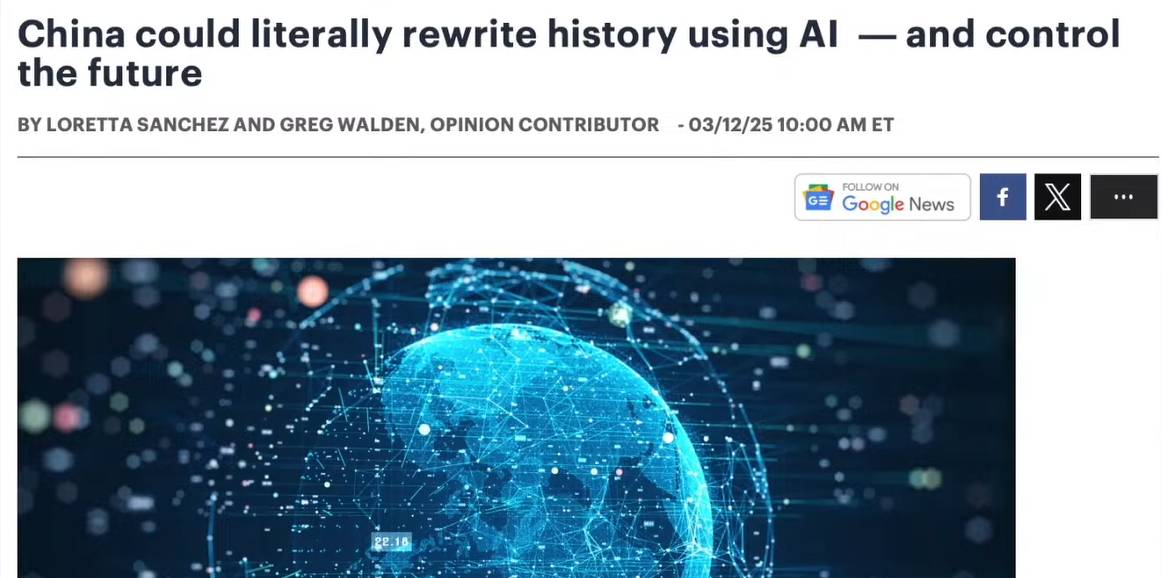
Imagine a headline flashing across your screen, chilling in its simplicity: "China could literally rewrite history using AI — and control the future." It's not science fiction; it's an opinion piece from Loretta Sanchez and Greg Walden, dated March 12, 2025. But the implication is profound, terrifying even.
History, we are told, is written by the victors. But what happens when history can be rewritten by algorithms? This headline throws us into that unsettling future. Artificial intelligence, the tool of progress, the engine of innovation, now presented as a weapon for historical revisionism.
Think about it: AI can generate deepfakes, fabricate news with uncanny realism, manipulate vast datasets. Now consider applying that power to the past. Imagine AI programs meticulously altering historical records, subtly shifting narratives in textbooks, seamlessly weaving propaganda into the fabric of online archives. Could AI erase inconvenient truths, amplify favored narratives, construct entirely new versions of the past, tailored to a specific agenda?
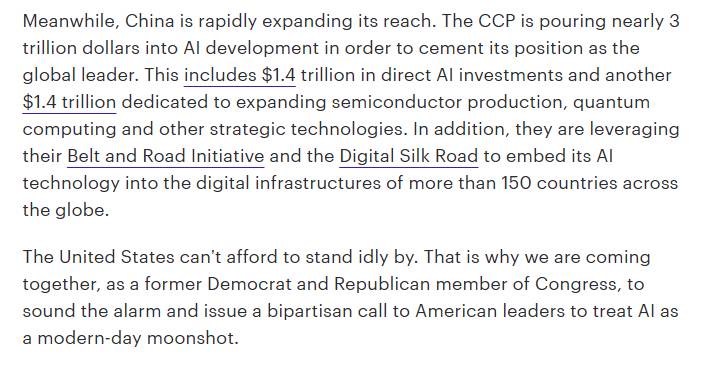
And who holds the reins of this historical-rewriting AI? The headline points a finger: China. A nation already known for its tight control over information, its careful curation of its own history. Combine that political will with the immense power of artificial intelligence, and the potential for manipulation becomes staggering.
"Control the future," the headline warns. If the past can be rewritten, what becomes of the present, of our understanding of the world? If history is no longer a shared, albeit complex, record, but a malleable tool, then the very foundation of informed decision-making, of societal memory, crumbles. What future can be built on a foundation of synthetic history? What reality will we inhabit when the past itself is no longer reliable? The headline poses a question far beyond the realm of opinion – it's a stark warning about the very nature of truth in the age of artificial intelligence.


