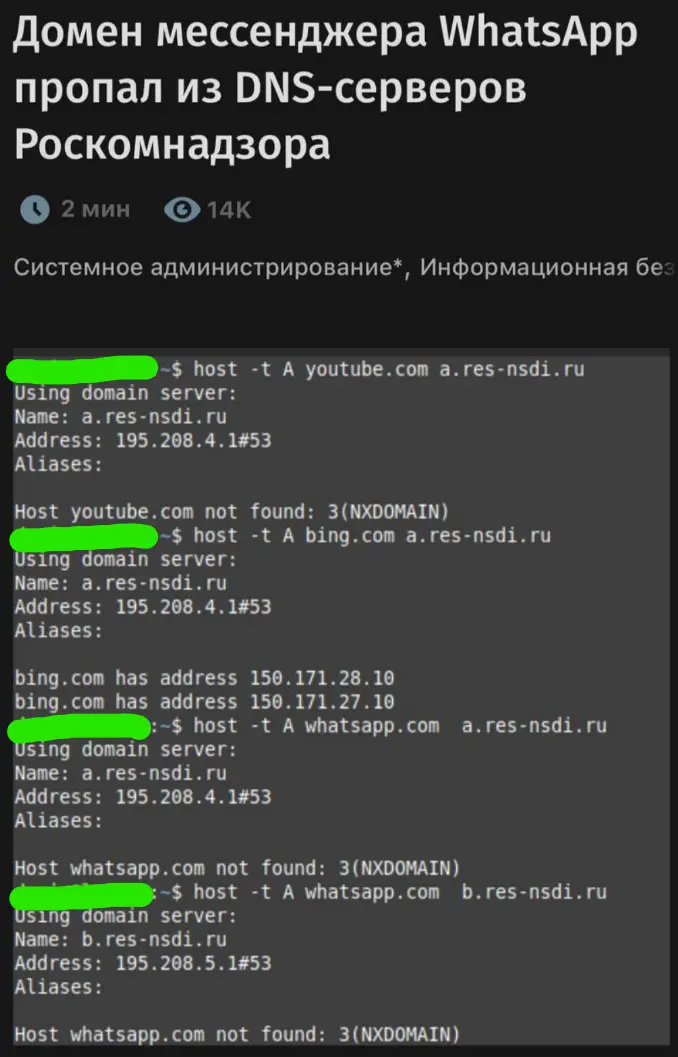
Look at that screenshot closely. It isn’t just a server error; it is a glimpse into the future of the internet in Russia, or rather, the lack of it. The command line shows that the Russian national domain name system is explicitly saying "Not Found" for YouTube and WhatsApp. They aren't just slowing it down anymore; they are erasing it from the directory. For a regular user, these sites simply cease to exist.
At first glance, the reaction in Ukraine is obvious: serve them right. Let them sit in the stone age. Let them watch their domestic cartoons and use carrier pigeons. It feels like justice. But if you look deeper, this situation is terrifying. We are witnessing the final construction of a dome over a country of 140 million people. And this dome isn’t locking them in; it’s locking the truth out.
When YouTube works, there is a chance, however small, that a random Russian user stumbles upon a video showing the bombed cities of Ukraine or a report on the staggering losses of their army. Algorithms might push a piece of reality into their feed. But when YouTube is killed at the DNS level, that window shuts. The alternative is RuTube and VKontakte, platforms that are strictly controlled and scrubbed clean of any dissent.
WhatsApp is even more critical. It was the primary way for families to talk, for rumors to spread, and for the "kitchen talk" that undermines dictatorships to happen. Blocking it means severing the horizontal ties between people. Without these tools, the only loud voice remaining is the television.
Here is the problem with the "let them suffer" mentality: we are creating a North Korea right on our border, but one with nuclear weapons and vast resources. A population that has absolutely no access to the outside world becomes a monolithic block of hate. They won't know about war crimes. They won't know the world opposes them. They will only know what the Kremlin propaganda machine feeds them 24/7.
You might argue that smart people will install a VPN. Sure, the tech-savvy hipsters in Moscow will jump over the digital wall. But revolutions aren't made by a few thousand geeks with paid subscriptions. They are made by the masses. The average Ivan in a provincial town won't bother with complex setups. He will just turn on the TV because his phone stopped working. And the TV will tell him that the West broke his internet, fueling his anger against us even more.
The isolation of Russia doesn't lead to anti-war protests; it leads to a consolidation of the regime. We need them to see how well the West lives, we need them to see our truth, and we need them to doubt. By cheering for their digital blackout, we are cheering for the creation of millions of mindless soldiers who believe they are fighting a holy war because they literally cannot see anything else.


